The salt water pool vs chlorine debate has a twist most sales pitches skip: a salt pool is a chlorine pool. The only real difference is where the chlorine comes from, but that one change shows up in your pH, your stone coping, your equipment and your budget.
Below is how the two compare here in DFW, with our hard tap water and triple-digit summers.
A Salt Pool Is Still a Chlorine Pool
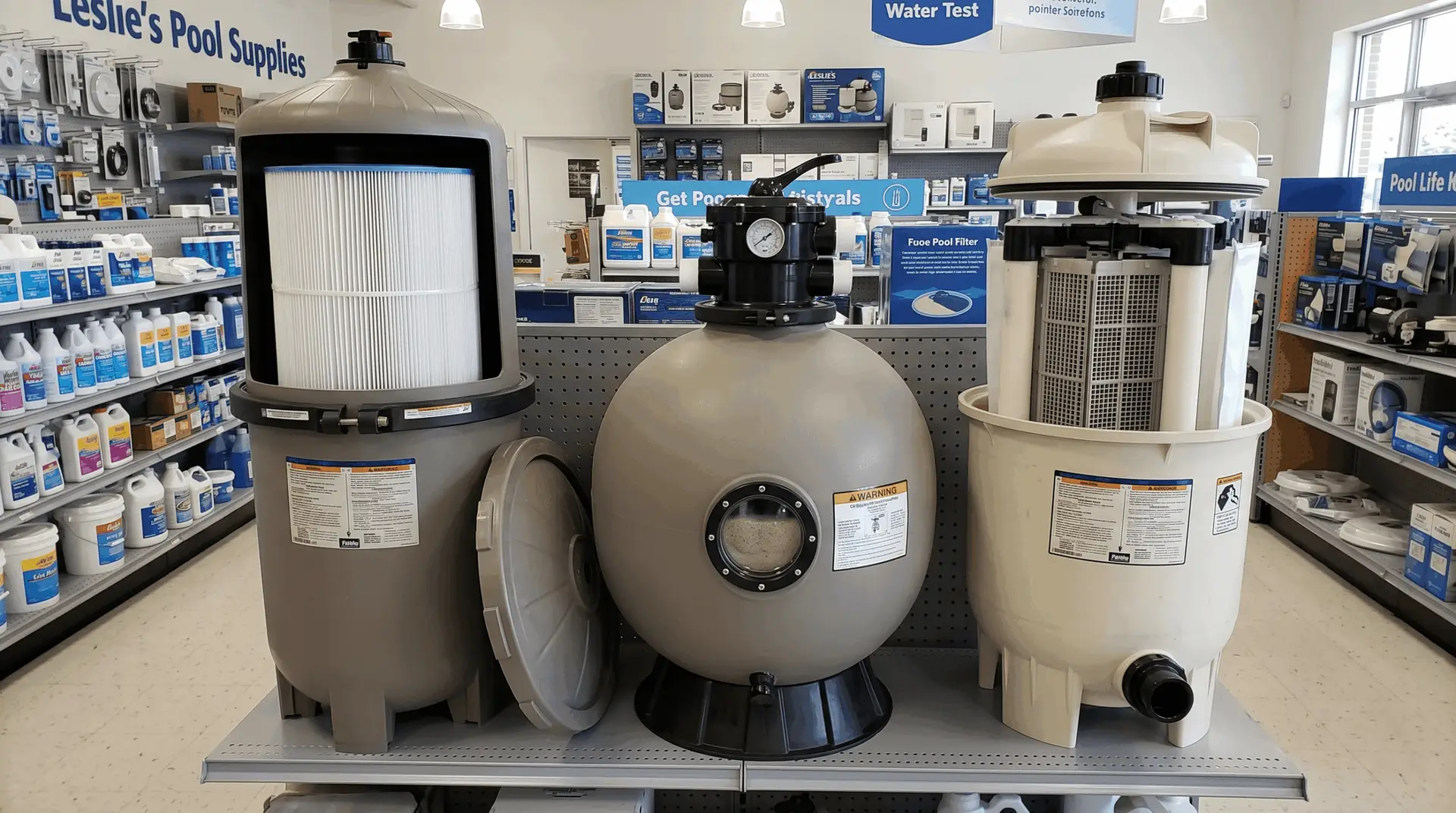
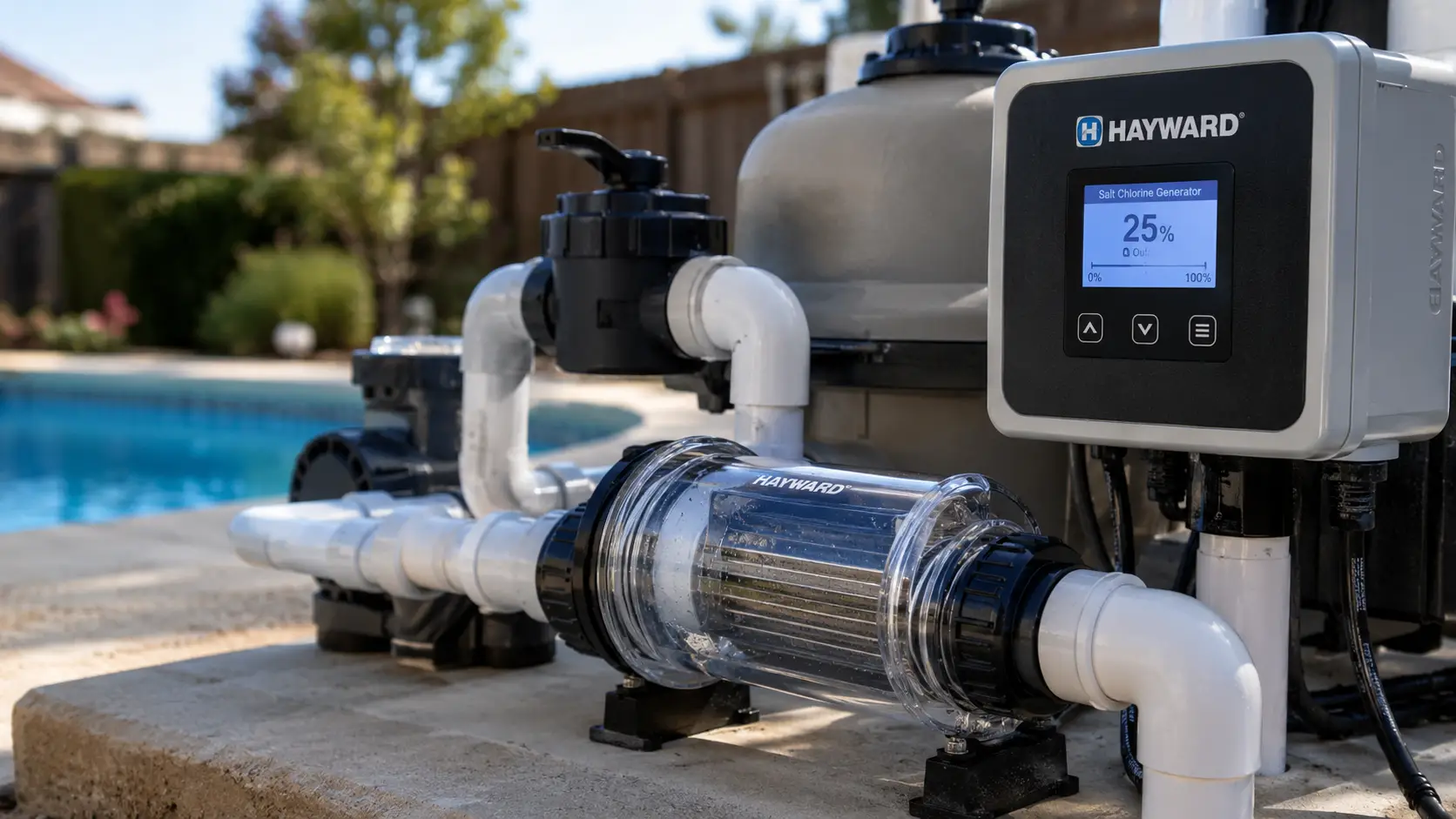
A salt system has two parts: a control box and a cell plumbed into the return line. Water flows through the cell, and charged metal plates turn dissolved salt into chlorine. The salt itself doesn’t kill anything. Once that chlorine does its job, it turns back into salt, so the cell reuses the same salt over and over.
That’s why you only add salt when water leaves the pool. Backwashing, heavy rain and splash-out all take salt with them.
A chlorine pool gets its chlorine from a jug or bucket instead. Most homes in the Metroplex use liquid chlorine or slow tablets in a floater, with granular shock now and then. In the water, every one of them turns into the same germ killer the salt cell makes. So the target doesn’t change either: free chlorine around 2 to 4 ppm, and never below 1 ppm.
The cell also makes a little hydrogen gas, so every system has a safety interlock, usually a flow switch, that shuts the cell off when the pump stops. If the pump isn’t running, the cell isn’t making chlorine.
How Salty Is a Salt Water Pool?
It’s far less salty than most people expect. Most salt systems run at 3,000 to 3,500 ppm, and a few models allow up to 8,000 ppm. To reach 3,000 ppm, you add at least 250 pounds of salt for every 10,000 gallons of water. That sounds like a lot until you compare it to the Gulf.
Salt Pool Water vs Ocean Water
Ocean water carries about 35,000 ppm of salt, according to the U.S. Geological Survey. So a salt pool runs about one tenth as salty as the ocean. For taste, the EPA’s guideline for dissolved solids in drinking water sits at 500 ppm. A salt pool sits well past that line, so you may notice a faint salty taste if you swallow some. Still, you won’t climb out sticky like after a day at Galveston.
A salt pool holds about a tenth of the salt in ocean water, but six times the level where tap water can taste salty.
Source: U.S. Geological Survey (ocean water), U.S. EPA secondary drinking water standards (taste guideline), industry operating guidelines (salt pool range).
| Water | Dissolved salt (ppm) |
|---|---|
| EPA taste guideline (dissolved solids) | 500 |
| Salt pool, typical low end | 3,000 |
| Salt pool, typical high end | 3,500 |
| Ocean water (USGS) | 35,000 |
Chlorine Pools Collect Salt Too
Liquid chlorine is mostly water and salt, and every dose leaves salt behind once the chlorine is used up. Evaporation only removes pure water, so those salts stay put and build up season after season.
Salt Water Pool vs Chlorine: How the Chemistry Drifts
Salt and chlorine push pH in opposite directions, and they treat stabilizer very differently.
Salt Pools Push pH Up
The reaction in the cell makes chlorine plus sodium hydroxide, which is a strong base. Hydrogen bubbles also stir the water as they escape, and that extra aeration nudges pH higher. So a salt pool needs acid on a regular schedule, usually more often than owners expect. Keeping total alkalinity at the low end of the normal range, around 80 to 100 ppm, slows the climb.
Aim for pH between 7.4 and 7.6. Human tears sit near 7.5, which is why water in that range feels easy on your eyes. pH also changes how hard your chlorine works. At 7.5, about half of your free chlorine is in its strong, fast-acting form, but at 7.8 only about a third is.
Tablet Pools Pull pH Down and Stack Stabilizer
Chlorine tablets (trichlor) are acidic, with a pH around 3, so they drag pH and alkalinity down over time. Every tablet also adds stabilizer, sold as cyanuric acid or CYA. Stabilizer doesn’t burn off. The only real way to lower it is to drain part of the pool and refill. Liquid chlorine behaves more like a salt cell, because it raises pH a little and adds no stabilizer at all.
Stabilizer Needs in the Texas Sun
In an outdoor pool with no stabilizer, half the free chlorine can burn off in less than an hour of direct sun. With stabilizer in the 30 to 50 ppm range, chlorine lasts three to ten times longer. A salt pool still needs stabilizer added at startup and after big water changes, though some cell makers ask for a higher target, so check your manual. The upside is that it holds steady, since the cell adds none of its own.
With stabilizer in range, a cell sized for your pool’s gallons and a pump that runs long enough can keep up through a DFW July. After a big storm or a pool party, a jug of liquid chlorine helps it catch up. Too much stabilizer causes its own trouble, though, because high levels go hand in hand with more algae. That’s the trap a tablet-fed pool can fall into by August.
How Hard North Texas Water Scales a Salt Cell
Tap water across the Metroplex runs hard, whether it’s NTMWD or Dallas water, and it’s treated with chloramine. In July, evaporation pulls out pure water and every top-off brings in more calcium. Calcium also gets less soluble as water warms up, which is the opposite of how most chemicals behave.
The ideal calcium range is 200 to 400 ppm. Once calcium passes 500 ppm, scale is hard to avoid unless you hold pH and alkalinity low and steady. Hard water doesn’t decide salt versus chlorine on its own, because scale forms on tile and heaters either way. A salt cell just adds one more place for it to land.
The inside of the cell is one of the first spots scale forms, since the plates make sodium hydroxide right at their surface. White crust builds between the plates, blocks the flow and cuts chlorine output. Most control boxes reverse the charge on the plates now and then to shed scale. Still, hard water can outrun that feature.
Salt Cell Cleaning in Hard Water
Check the cell often from June through September, and clean it only when you can see scale. A scaled cell gets a short soak in a mild acid solution, mixed the way the cell’s maker says. Always add acid to water, never water to acid. Acid also wears the plate coating a little each time, so don’t clean a cell that is already clean. The better fix happens upstream: keep pH, alkalinity and calcium in balance and scale has nowhere to start. That cell check is the one part of salt water pool maintenance a chlorine pool never needs.
Cold Water and the Winter Gap
Cells slow down in cold water and eventually stop. One major cell maker tells owners to switch the chlorinator off once the water drops below 50°F. So when a norther blows through in January and the water drops into the 40s, plan on adding liquid chlorine by hand for a while. Algae grows slowly in cold water, so a modest dose usually holds.
Will Salt Damage Stone Coping or Equipment?
Builders and forum posts argue about this, and both sides have a point.
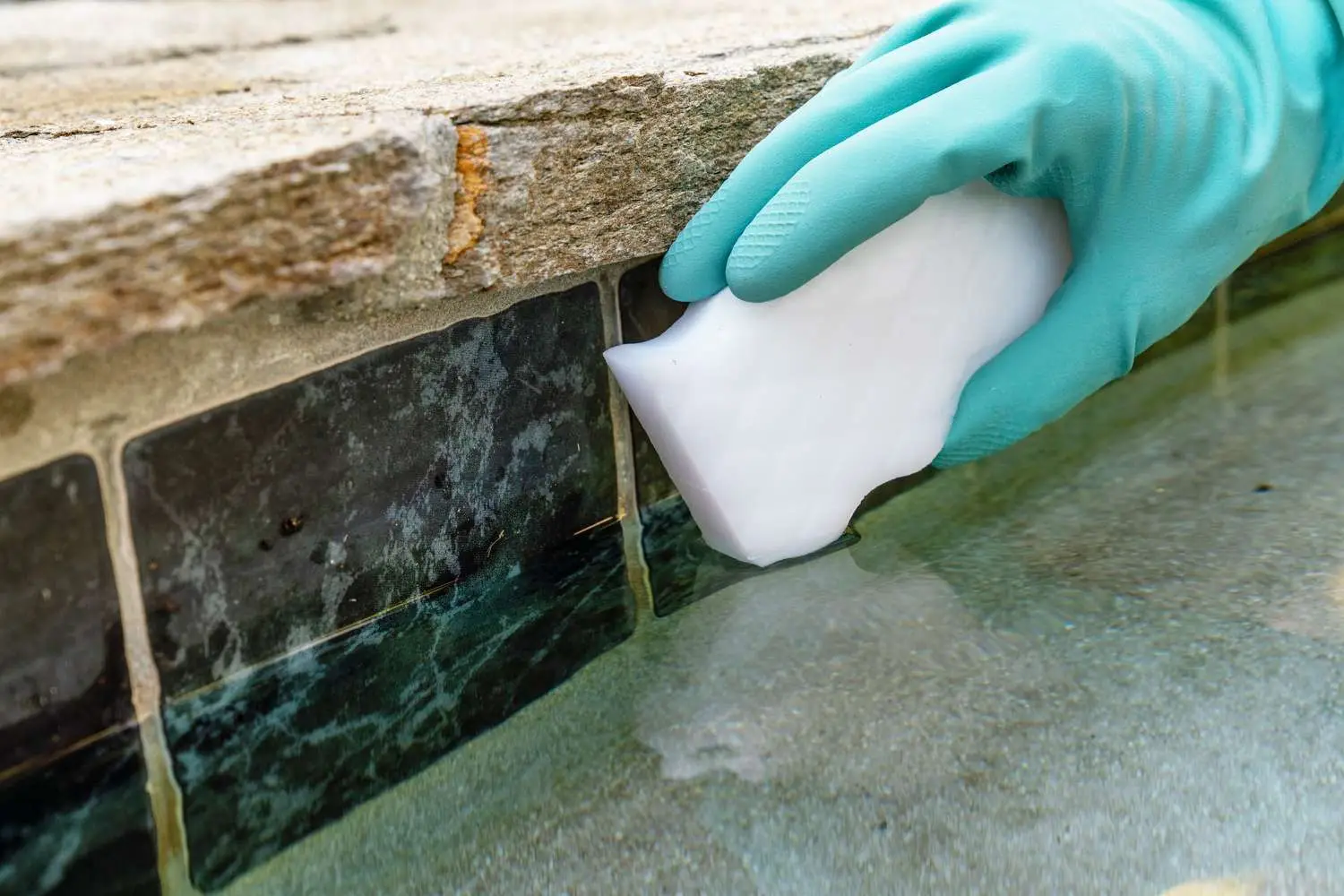
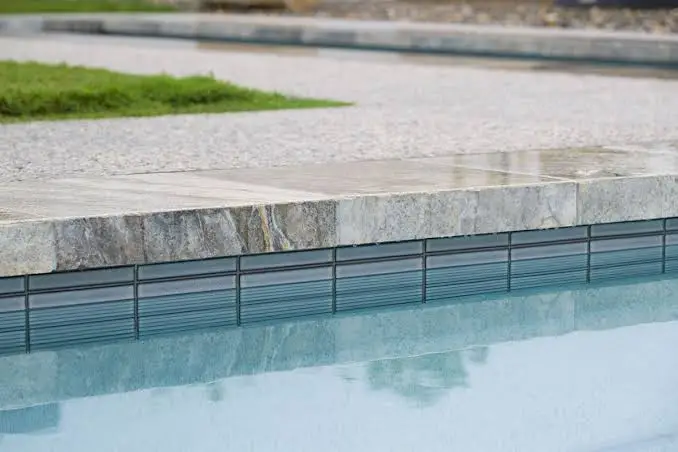
Salt water that splashes onto porous stone dries and leaves salt crystals in the pores. Over many wet and dry cycles, soft limestone, some travertine and some flagstone can flake or turn sandy. Stone quality matters most, though. Poor stone flakes next to chlorine pools too, and every pool picks up salt over time. Sealing natural stone and hosing off the coping now and then both help. If you’re choosing new coping during a pool remodeling project, ask for dense stone and plan to seal it.
A cracked deck is a different story, and it usually isn’t salt. Blackland Prairie clay swells when it’s wet and shrinks in a drought. That movement cracks concrete and pops coping loose, salt or no salt.
For equipment, the risk is metal. As dissolved solids rise, two different metals in the same water corrode faster. A copper heat exchanger sharing water with stainless rails is a common example. Good electrical bonding and balanced water matter more than the salt itself. Before you convert, check that your heater, lights and metal fixtures are rated for salt. And if your pool was just replastered, wait 28 days before any salt goes in.
How Salt and Chlorine Water Feel
Feel is the part of the saltwater vs chlorine pool comparison people notice first. Plenty of swimmers say salt water feels softer. Part of that is the salt, and part is steadier chlorine, because the cell makes a little every hour the pump runs. A hand-fed pool swings from high after a dose to low by the end of the week.
The “chlorine smell” and red eyes come from combined chlorine, also called chloramines. They form when chlorine reacts with sweat, urine and other waste, and they show up in salt pools and chlorine pools alike. A salt pool is not chlorine-free, and it isn’t healthier by default.
Upfront Cost vs Ongoing Cost
Equipment prices swing with pool size, the cell model and the plumbing and electrical work your pad needs, so we won’t guess at numbers. Here’s where the money goes on each side of the salt water pool vs chlorine choice instead. Salt moves the spending up front, while chlorine keeps costing you trips to the store all season.
What a Salt Pool Costs
- The cell, control box and installation, all upfront
- Starting salt, at least 250 pounds per 10,000 gallons
- Muriatic acid, more often than a chlorine pool needs
- Salt top-ups after backwashing and heavy rain
- Power to run the pump long enough for the cell to keep up
- Cell cleaning, plus a replacement cell every few years
What a Chlorine Pool Costs
- Little or nothing upfront if you already have a feeder or floater
- Chlorine to buy, haul and store all season
- A partial drain and refill when tablet stabilizer climbs too high
Is a Salt Water Pool Better? Who Each Option Suits
Put the salt water pool pros and cons side by side, and salt wins for most owners who swim often and want steady water. It isn’t the right call for every pool, though.
| If this sounds like you | Lean toward |
|---|---|
| You’re tired of hauling jugs and want steady chlorine | Salt |
| Your coping is soft natural stone you won’t seal | Liquid chlorine |
| Your upfront budget is tight this year | Chlorine |
| Your pool was replastered in the last 28 days | Chlorine for now |
Salt suits a family in Frisco or Prosper that swims all summer and doesn’t want to babysit chlorine levels. Chlorine suits an older pool with soft coping, a pool that sits unused for long stretches, or an owner whose weekly service already handles the chemistry. Tablets alone are the option we like least in Texas sun, because stabilizer keeps creeping up.
If you go salt, think about pairing it with pool automation. The cell only makes chlorine while water flows, so the pump schedule is your chlorine schedule. An automation panel runs the pump and cell together, and it lets you control pumps, heating, lighting and water features from your phone. It still won’t test the water for you.
If your water turns hazy after a switch, our guide to cloudy pool water walks through the usual causes. For the full routine on either system, use our pool maintenance checklist. And if your pump and filter are getting old, read how long pool equipment lasts before you add a cell to them.
Ready for a Salt System? How We Can Help
Southern Pool + Outdoors installs and services salt systems for pools in Allen, McKinney, Plano, Richardson and across North Texas. We also install chlorinators for owners who stay with chlorine.
If you’d rather have someone else watch the chemistry, our weekly pool service starts at $179 a month with no long-term contract. Choose Full Service or Chemical Only, and you get a digital report after every visit with your chemical readings. Salt cell cleaning is available as an add-on. Call (214) 922-1914 or schedule service online.
Salt Water Pool vs Chlorine Questions From North Texas Pool Owners
These are the salt and chlorine questions we hear from DFW pool owners, with straight answers.
Is a saltwater pool as sanitary as a chlorine pool?
Yes, as long as free chlorine stays in range. The salt cell makes the same chlorine you would pour from a jug, so the target is 2 to 4 ppm free chlorine either way. What matters is keeping that level steady along with pH and stabilizer.
Is a salt water pool harder to maintain?
No, but the work changes. You stop buying and adding chlorine, and you start adding acid more often, checking salt and looking inside the cell for scale. With hard North Texas tap water, that cell check is part of salt water pool maintenance from June through September.
What chemicals do I need for my saltwater pool?
You still need salt, acid, stabilizer and a test kit, plus liquid chlorine for boosts. Salt only goes in after water leaves the pool, and acid keeps the pH from climbing past 7.6. Stabilizer goes in at startup and after big water changes.
Which is cheaper to maintain, salt or chlorine pool?
Salt costs more upfront, then trades weekly chlorine purchases for acid, salt top-ups, power and cell care. Chlorine costs less to set up, but you keep buying chlorine all season. Tablet pools can also face a partial drain when stabilizer climbs too high. Which one comes out ahead depends on your pool size and equipment.
Is it worth converting a pool to saltwater?
For many North Texas pools it is, if your equipment and coping suit salt. Check that your heater, lights and metal fixtures are rated for salt, and plan to seal soft natural stone. If the pool was just replastered, wait 28 days before adding any salt.
Will a salt cell keep up in a Dallas summer?
Yes, if the cell is sized for your pool, the pump runs long enough and stabilizer stays in the 30 to 50 ppm range. Without stabilizer, half the chlorine can burn off in under an hour of July sun. After a big storm or a pool party, a boost of liquid chlorine helps the cell catch up.
Can I run my salt system when the water gets below 60 degrees?
Often not well. Cells slow down as the water cools, and one major cell maker tells owners to switch the cell off below 50°F. In a Carrollton or McKinney winter, plan on adding liquid chlorine by hand until the water warms up. Algae grows slowly in cold water, so a modest dose usually holds.
Our builder says salt will ruin a travertine deck. Is that true?
It can damage soft, porous stone, but stone quality matters most. Salt water dries in the pores and can make soft travertine or limestone flake over many wet and dry cycles. Sealing the stone and rinsing the coping now and then help a lot. Also keep in mind that every pool gathers some salt over time, salt cell or not.
Do I still need to add chlorine or shock a salt pool?
Sometimes. The cell handles day-to-day chlorine, but liquid chlorine boosts help after storms, heavy swimming and in winter when the cell is off. If you smell "chlorine" or see red eyes, that's combined chlorine, and it means the pool needs more free chlorine, not less.
We have very hard water. Should we go salt or chlorine?
Hard water doesn't decide it, because calcium climbs either way as evaporation and top-offs add more. A salt cell is just one more place for scale to land. If you go salt in Plano or Allen, keep calcium near 200 to 400 ppm, run pH between 7.4 and 7.6, and check the cell for white crust in summer.