
Pool Filter Installation in North Texas
Southern Pool + Outdoors handles pool filter installation across North Texas. We size the new cartridge, DE or sand filter to your pump, plumb it in, prime it and pressure test it before we leave. Call (214) 922-1914.

Cracked tank or pressure that won't come down? Get a free pool filter installation quote from Southern Pool + Outdoors.
Schedule Service!
A New Filter Has to Fit the Whole System
Chlorine kills germs and algae, but it doesn’t take anything out of the water. The filter does that job. Sometimes the tank cracks or the media won’t clean up anymore. Sometimes the old unit never matched the pump. Either way, the water starts to look flat and the chemical bill climbs. That’s the point where pool filter replacement starts to make sense. A cracked tank is also a safety issue, because a pressure filter that fails can come apart hard.
A new filter is only as good as the match behind it. Before we recommend one, we look at your pool’s volume, the pump’s flow, the pipe size, how often people swim, and how much pollen and leaf litter your yard throws at it. We also check how the filter will work with your heater, salt system or automation, since all of that shares the same plumbing.
Southern Pool + Outdoors installs all three residential filter types:
- Cartridge filters
- DE (diatomaceous earth) filters
- Sand filters
Our pool filter installation covers the whole job. We inspect the equipment pad, walk you through the options, remove the old unit and update fittings and unions as needed. Then we set the new filter to the manufacturer’s specifications, check that the pump, heater and automation still work together, and prime and pressure test the system. Before we leave, we show you the clean pressure reading and explain how often the filter will need cleaning.
If your filter only needs a part, we’ll say so and point you to pool filter repair instead of selling you a new tank.
We Are Experts With:




When Pool Filter Replacement Makes Sense
Plenty of homeowners replace filters too early, and plenty of filters run years past the point where they should have come off the pad. The tank itself tells you most of what you need to know.
Signs the Filter Is Finished
A pressure filter holds real force when it runs. If the tank, lid or clamp has a crack, that is a safety problem, not a cosmetic one. A pressurized tank that fails can separate violently, which is why we never open one without shutting off the pump and bleeding the air out first. Other signs are slower:
- Pressure that stays high even after a full cleaning
- A cracked or weeping tank, lid or bulkhead
- Sand blowing back into the pool from a broken lateral
- Torn DE grids or a cracked manifold
- Water that never clears even with good chemistry
- A filter that was undersized for the pump from the start
Some of these are part problems. We can fix a torn grid, a bad gauge or a worn O-ring. Before calling a filter finished, we check the gauge too, because a stuck gauge can make a healthy filter look clogged. A cracked tank usually can’t be saved, though, and the cost of a new tank half plus labor often comes close to a whole new filter.
Repair or Replace the Whole Filter?
Our rule is simple. If the tank is sound and only the inside parts are worn, we fix the parts. If the tank has a crack, the maker no longer supports the model, or the filter was too small for the pump all along, a full replacement is the better spend. Old sand on its own isn’t a reason for a new filter, either. Pool sand usually lasts somewhere between five and 15 years. When it’s done, sand changes restore the filter for a fraction of the cost.
Choosing the Right Type of Pool Filter
All three filter types can keep a North Texas pool clear when they’re sized right and maintained. The differences come down to how fine they filter, how much water they use, and how much work they take.
Cartridge Filters
A cartridge pushes water through pleated polyester fabric and traps particles down to roughly 10 to 25 microns. For scale, the human eye can’t see much below 40 microns. You never backwash a cartridge, so it saves water, and a cartridge setup takes up about half the pad space of a comparable sand or DE filter. The tradeoff is that you have to pull the elements to hose them off and soak them. Cartridges are also the most sensitive of the three to high flow. Push water through one too fast and dirt, minerals and oils end up so deep in the fabric that cleaning won’t release them.
DE Filters
DE filters catch the finest particles of any pool filter, roughly 2 to 6 microns. Fabric-covered grids inside the tank hold a thin cake of diatomaceous earth powder, and that powder does the filtering. You backwash a DE filter once pressure rises 8 to 10 psi over its clean reading, then recharge it with fresh powder. It gives the clearest water, but it takes the most care. Dry DE powder can contain crystalline silica, so anyone adding it should wear a mask.
Sand Filters
Sand filters trap particles in the 25 to 100 micron range, coarser than the other two. They’re simple and forgiving, and you clean them by backwashing. They also use the most water, because every backwash sends water to waste. That matters if your pad has nowhere good to drain, or if your yard slopes toward a neighbor’s fence. Many North Texas homeowners who hate backwashing switch to a cartridge when the old sand filter fails. That is a reasonable move when the pump and plumbing fit it.
Sizing a New Pool Filter Correctly
Most filter trouble we see at installs traces back to sizing. A filter that is too small clogs fast, runs at high pressure and wears out early.
Start With the Pump, Not Just the Gallons
The filter has to handle the most water your pump can push. Every filter has a rated flow per square foot of media, and the data label lists its total filter area. Divide the pump’s maximum flow by that rate and you get the smallest filter that will work. Pool volume still matters, because the pump has to move all of the water through the filter. One full turnover filters about 63% of the water, and it takes about four turnovers to filter all but 2%.
Why a Bigger Filter Usually Pays Off
A larger filter has more media, so it holds more dirt between cleanings and puts less resistance on the pump. The U.S. Department of Energy’s guide to efficient pool pumps suggests a filter rated at least 50% above the pool’s design flow rate for that reason. In a yard with live oaks, that extra media is the difference between cleaning a cartridge in spring and cleaning it every few weeks. We’ll quote the largest filter that makes sense for your pad and budget.
What an Oversized Pump Does to a Filter
The opposite problem is just as common. A bigger pump bolted onto an older system can push more water than the filter, the drain covers and the piping can handle. On a sand filter, the pump forces dirt deep into the bed and water channels around it unfiltered. On DE, the flow presses powder and oils into the grid cloth and shortens grid life. If you’re also replacing the pump, we size both together. Our pool pump installation page covers that side of the job.
What's Included in Our Pool Filter Installation
Every installation follows the same steps, adjusted for the filter type and your equipment pad.
Checking the Equipment Pad First
We start with your existing plumbing layout, the pump, the electrical connections at the pad, and how the system circulates now. We also look at where backwash water will go. A sand or DE filter needs a safe place to drain, and some pads don’t have one, which can make a cartridge the better fit. It’s also worth a photo of the old filter’s data plate. That record makes ordering the right parts easy years from now, after the label has faded in the sun.
Plumbing the New Filter in the Right Order
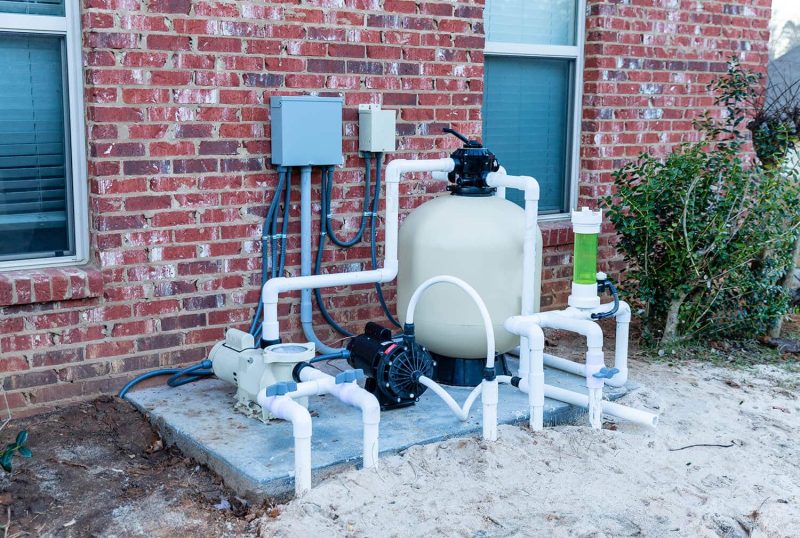
On a home pool, the filter sits right after the pump, on the pressure side. The heater goes after the filter, and a chlorinator or salt cell goes after the heater, so concentrated chlorine never runs back through the heater. We remove the old unit, update fittings and unions where needed, and set the new filter to the manufacturer’s specifications. Inlet and outlet ports don’t always line up with the old filter, so we replumb instead of forcing a fit.
Startup and Your Clean Pressure Baseline
We prime the system, bleed the air, and check every connection under pressure. Then we record the clean starting pressure. That number matters for the life of the filter. When the gauge reads about 8 to 10 psi above it, the filter is due for cleaning or a backwash. A new sand filter also needs several backwashes at startup to flush out the fine dust that comes with new sand, so oils have less to stick to.
Pool Filter Installation for North Texas Pools
A filter here works harder than the pool-care guides written for milder places assume. Spring oak pollen lands as a yellow film, cottonwood fluff follows, and south winds carry dust in most of the year. Fall brings leaves from live oaks and cedar elms. The skimmer gets the big pieces, and the filter gets everything else.
Hard fill water adds another load. Evaporation through a 100°F summer concentrates calcium, and scale builds on cartridge pleats, DE grids and the inside of the tank. Sunscreen and body oils coat the media through a long swim season, too. A filter with more surface area handles all of that better, which is one more reason we lean toward sizing up. Once the new filter is in, regular filter cleaning keeps it at its best.
Hard Freezes and Cracked Tanks
A filter tank holds water, and water expands when it freezes. During a hard freeze like February 2021, any filter, pump or pipe with still water inside can crack. Keeping the pump running through a freeze keeps water moving and usually prevents that. If the power went out, check the tank, lid and drain plug once things thaw. Hairline cracks tend to show up as a slow drip at the bottom or a damp ring on the pad. A cracked tank can look fine at rest and then fail under pressure, so don’t restart a filter you think has a crack until someone looks at it.
Why Homeowners Choose Southern Pool + Outdoors for Pool Filter Installation
We give honest recommendations. If a repair will do, we say so. When the filter does need replacing, we size it for your pump and your yard, plumb it in the right order, and test it before we leave. You get the clean pressure reading and a plain explanation of when the filter needs attention next.
New filters are one part of our pool equipment installations, along with pumps, heaters and automation. If your filter has a crack, leaks or never keeps the water clear, call (214) 922-1914 or schedule pool filter installation online.
Our Service Areas
- Allen
- Plano
- Dallas
- Mckinney
- Wylie
- Anna
- Fairview
- Prosper
- Lucas
- Celina
- Carlton
- Melissa
Pool Filter Installation Questions From North Texas Homeowners
Here are straight answers to the pool filter installation questions homeowners around North Texas ask most often.
There's no fixed schedule for the whole filter. Replace it when the tank cracks, leaks or parts for the model are gone. The media inside wears out on its own timeline. Cartridges and DE grids need replacing when they tear or stop cleaning up, and pool sand usually lasts five to 15 years. A sound tank can outlast several sets of media.
Pool filter replacement cost depends on the filter type, its size, and how much replumbing your equipment pad needs. A straight swap costs less than a job where the ports don't line up or the pump also needs replacing. Call (214) 922-1914 and we'll look at your pad, then give you a free quote before any work starts.
Start with the pump, not just the gallons. The filter has to handle the pump's maximum flow, and the filter area on its label tells you how much it can take. Moving 30,000 gallons through the filter in six hours takes about 83 gallons per minute. Then size up. A bigger filter goes longer between cleanings, which helps a lot under North Texas trees.
On almost every home pool, the filter goes after the pump. The pump pulls water from the skimmer and drain, then pushes it through the filter under pressure. After the filter comes the heater, then any chlorinator or salt cell, so strong chlorine doesn't flow back through the heater. That order protects the equipment and keeps the gauge readings meaningful.
Shut off the pump and release all air pressure first, then remove the old filter. Set the new one on a level base and plumb it in the right order after the pump. Follow the manufacturer's instructions for the ports and valve. Prime the system, bleed the air, check for leaks under pressure, and write down the clean starting pressure for future reference.
It depends on what bothers you about the old filter. Cartridges skip backwashing, so they save water and work well where backwash has nowhere to drain. They filter finer than sand, but DE filters finer still. All three types keep water clear when sized right. If your DE or sand filter only needs a part, repairing it can be the cheaper call.
Usually, yes, within reason. A larger filter has more media, so it holds more dirt between cleanings and puts less strain on the pump. That's a real advantage in North Texas, where oak pollen, cottonwood and leaves load filters fast. The limit is your pad space and budget. We'll recommend the largest filter that fits both and still works with your pump.
If the bottom half has a crack, look hard at the rest. A tank that cracked in one place tends to crack somewhere else soon, and replacement halves can cost nearly as much as a new filter. If the top is sound and parts are easy to get, replacing one half can work. A cracked pressure tank should never stay in service.
A large cartridge filter is usually the easier choice under heavy trees. It holds a lot of debris and skips backwashing, which matters if backwash water would run toward your house or a neighbor's yard. A big sand filter works too and needs less hands-on cleaning. Either way, the bigger the filter, the longer it goes between cleanings in leaf season.
Usually, with some changes. Inlet and outlet ports sit in different spots on different models, and a new filter may be taller or wider than the old one. We replumb as needed instead of forcing fittings that strain the joints. The goal is a short, clean path from the pump through the filter and on to the heater.
Still have questions?