How long do pool pumps last? The U.S. Department of Energy puts the average pool pump at 4 to 7 years, and a well-kept inground pump can beat that with a seal or motor job along the way. The rest of your equipment runs on its own clock. Salt cells wear out sooner, while filter sand and a heat pump heater can go a decade or more.
Around DFW, heat on the pad and hard tap water do most of the damage, and the odd hard freeze finishes off whatever was already weak. Here’s what each part lasts and when to repair or replace it.
How Long Do Pool Pumps Last in North Texas?
That 4 to 7 year range comes from the DOE’s federal efficiency rule for pool pumps, and it varies by pump type. It’s an average, so it includes pumps that ran dry or cooked in full sun. A cared-for pump in Plano or McKinney has room to do better.
A pump is two machines bolted together. The wet end holds the housing, strainer pot, impeller and shaft seal, and the motor behind it spins the impeller. On most pumps the wet end outlasts the motor, which is why a motor swap can buy years when the housing is still sound.
Variable speed pumps also tend to last longer, and ENERGY STAR says they need less maintenance too. For daily hours, see our post on pool pump run time.
Age alone is a bad reason to pull a pump. A quiet, dry pump that still holds prime at year eight is doing its job.
The Motor Usually Fails First
Most motors don’t simply wear out. A shaft seal starts to weep, water creeps along the shaft, and the front bearing rusts. Hayward warns that a leaking seal can damage that bearing, so fix a small drip fast. Otherwise you’ll hear it soon: a growl that gets louder every week.
Heat is the other motor killer. It breaks down the insulation on the windings, and the hotter a motor runs, the faster that happens. Pool motors are built to handle air up to about 122°F, but a pad in full August sun with no airflow pushes that limit.
One easy habit: snap a photo of the motor nameplate while it’s readable. That label tells the next tech exactly what to match.
How Long Does Pool Equipment Last? Lifespans by Part
Every part on the pad has its own range. The chart shows only ranges with a solid source behind them.
Source: U.S. Department of Energy (pool pumps, heat pump heaters), Pentair (salt cells), industry operating guidelines (filter sand).
| Equipment | Typical life | Source |
|---|---|---|
| Heat pump pool heater | 10 or more years | U.S. Department of Energy |
| Sand filter media | 5 to 15 years | Industry operating guidelines |
| Pool pump (average) | 4 to 7 years | U.S. Department of Energy |
| Salt cell | 3 to 5 years (about 10,000 hours) | Pentair |
How Long Does a Pool Filter Last?
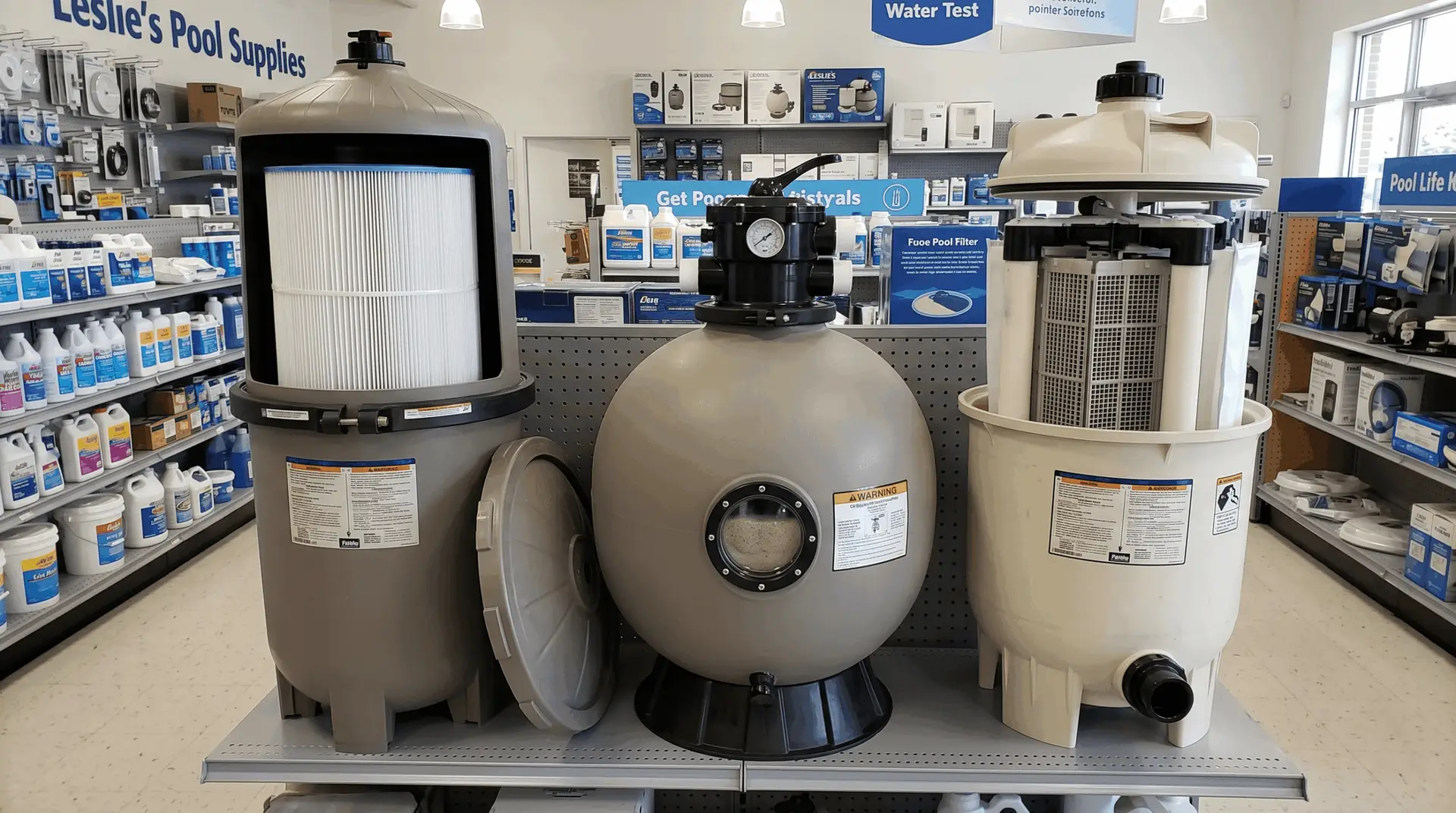
Split the filter into the tank and what’s inside it. Sand lasts about 5 to 15 years before it needs replacing. New sand has sharp edges that grab dirt, and old sand wears smooth and lets fine dirt slip through.
Cartridges and DE grids wear faster. Replace an element when the fabric tears, because a torn element sends dirty water straight back to the pool. The tank itself can run for many years, but a cracked tank calls for pool filter replacement. Sand in the pool usually means a broken lateral inside the filter, which is a repair. Comparing types? See our filter comparison.
How Long Do Pool Heaters Last?
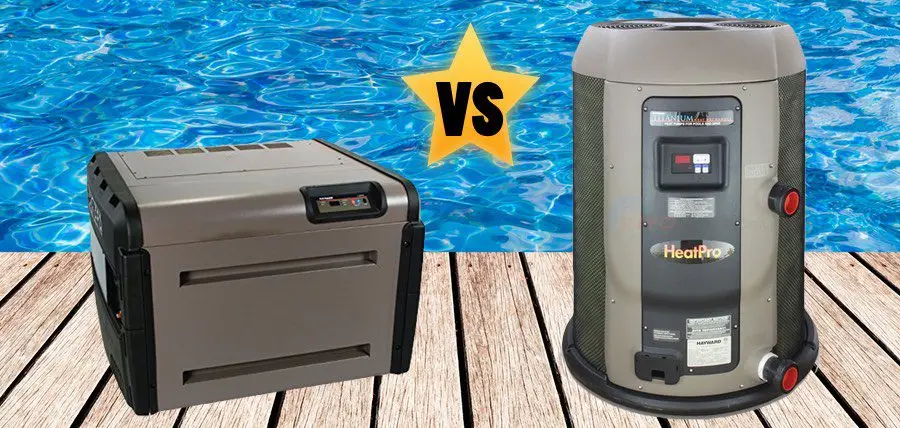
It depends on the type. The DOE says a heat pump pool heater can last 10 or more years with proper installation and maintenance, and that heat pumps typically outlast gas heaters. They do lose efficiency below about 50°F, so they struggle when a norther blows through.
Gas heaters usually die from the inside. Low pH or low alkalinity eats the copper heat exchanger. Hard water does the opposite and coats it with scale, and scale forms fastest there because the water inside the exchanger runs much hotter than the pool. A freeze can split exchanger tubes too, and that leak often doesn’t show until spring start-up.
Most other heater problems come down to one part, like a pressure switch or an igniter, and that’s a pool heater repair. Gas vs heat pump vs solar gets its own post on heater types for North Texas.
How Long Do Salt Cells Last?
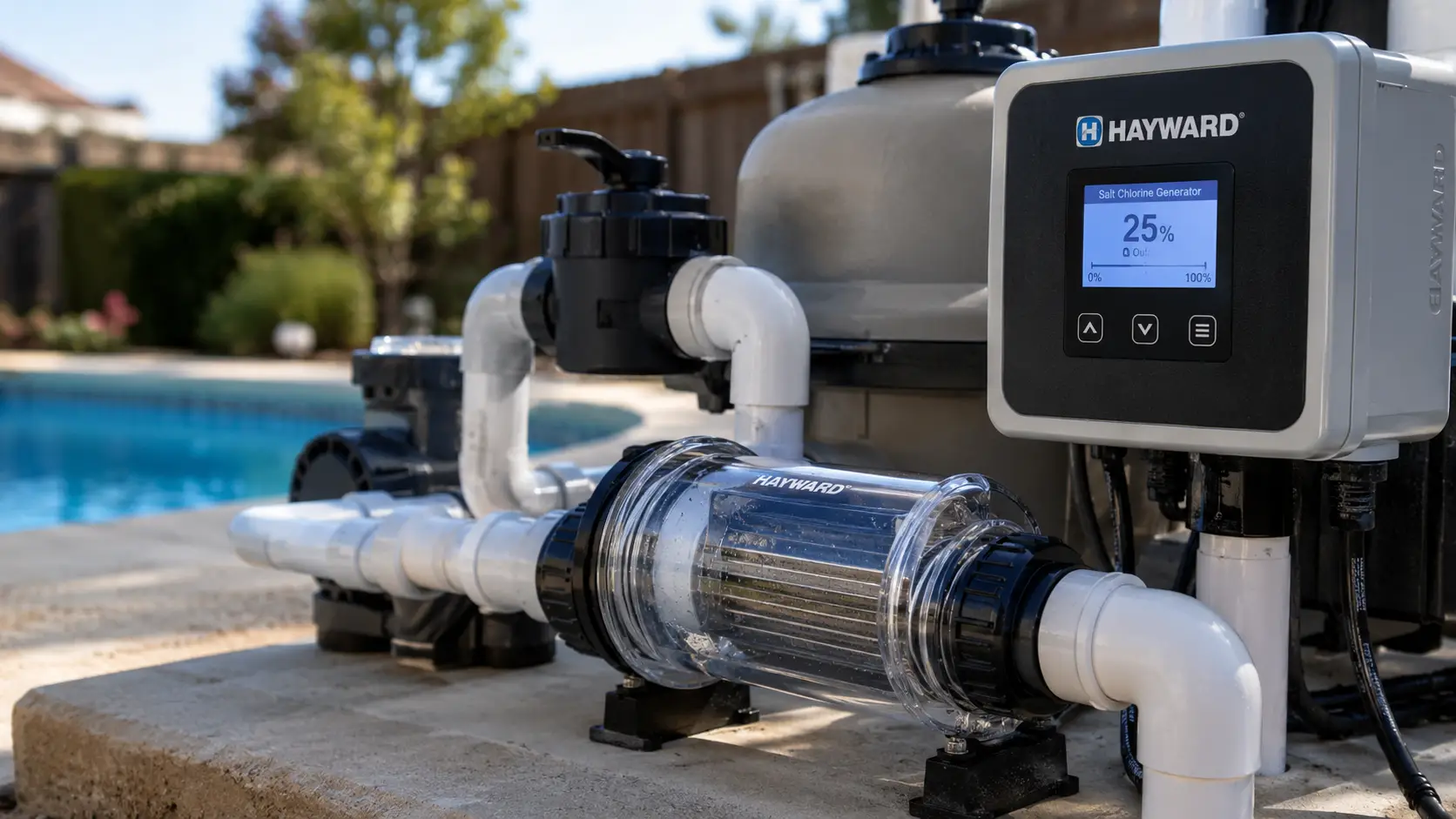
Pentair rates the cells in most residential salt pools at about 10,000 hours of operation, or roughly 3 to 5 years. In North Texas, a cell burns through those hours fastest in summer, when long pump days and hot water push chlorine demand up. Hard water also scales the plates, and a scaled cell makes less chlorine.
Pentair ties cell life to salt level and water chemistry as well. So test salt with a good kit before you blame the cell, and keep the plates clean (salt cell cleaning is one of our weekly service add-ons). Our salt systems page covers replacement, and our salt vs chlorine post covers whether salt suits your pool.
How Long Do Pool Lights Last?
LED fixtures far outlast old incandescent pool bulbs. For household lighting, the DOE says LEDs last up to 25 times longer than incandescent. A cracked lens or water inside the housing usually means a new fixture. In older Richardson and Plano neighborhoods, note that pools built more than about 30 years ago may lack GFCI protection on the light circuit. Our LED pool light guide covers upgrades.
Does Pool Automation Wear Out?
Automation has no clean lifespan number. It tends to fail in pieces, like a relay or a valve actuator, and a tech can usually swap those without replacing the whole system.
What Shortens Equipment Life in North Texas
Most equipment around here doesn’t die of old age. Heat, scale, ice, low water or a bad chemical habit gets to it first.
Triple-Digit Summers on the Pad
Every afternoon over 100°F makes it harder for a motor to shed heat. Pool motors pull outside air through for cooling, so grass clippings, live oak leaves and cottonwood fluff in the vents mean a hotter motor. Undersized wiring and low voltage add heat too, and Hayward notes that power can dip during heat waves.
Shade helps only if air still moves, so skip any motor cover that traps hot air. Keep the pad dry as well, because Hayward says flooding from rain can make a pump overheat and cut off.
Hard Tap Water Leaves Scale
NTMWD and Dallas tap water is hard, and evaporation concentrates it all summer. Scale can plug filters and heater tubes, and it coats salt cell plates. Corrosive water does its own damage to the metal in pumps and heaters. Balanced water protects every part on the pad and adds to its useful life. That means pH around 7.4 to 7.6, calcium hardness of 200 to 400 ppm, and a saturation index between -0.3 and +0.3.
Freezes Like February 2021
DFW doesn’t freeze often, but when it does, it hits equipment built for heat. In February 2021 the power went out across Texas, pumps stopped, and water sitting in pump housings and pipes froze and cracked them. During a freeze, keep water moving. Run the pump through the night, and know where your drain plugs are in case the power drops.
Low Water Lets the Pump Run Dry
South winds and summer evaporation pull the water level down. Once it drops below the skimmer opening, the pump gulps air. That starves the impeller (cavitation) and can damage the pump and motor. Running fully dry is worse. The shaft seal relies on pool water to cool it, and Hayward says a dry pump can overheat and melt that seal. After a vacation, check the water level first.
Chemical Habits That Eat Equipment
Stop putting chlorine tablets in the skimmer basket, convenient as it is. That feeds concentrated chemical into the suction side of the pump and corrodes the shaft seal, and the leak then takes out the motor bearings. Store chemicals away from the pad, too, since corrosive fumes attack motors. And any chemical feeder belongs after the filter and heater in the plumbing, never before them.
Repair or Replace? Rules of Thumb for Each Part
The first question is simple. Did one part fail, or is the structure gone? This table covers the usual calls.
| Equipment | Usually worth repairing | Usually time to replace |
|---|---|---|
| Pump | Leaking seal, bad capacitor, clogged impeller, bearings caught early | Cracked housing or strainer pot, worn motor on a worn wet end |
| Filter | Torn cartridge or grid, broken lateral, worn-out sand | Cracked tank |
| Gas heater | Igniter, pressure switch, sensor or thermostat | Leaking heat exchanger on an older unit |
| Salt cell | Scale buildup, wrong salt reading | Low output after a proper cleaning |
| Light | Bulb swap in a sound fixture | Cracked lens or water in the housing |
Count the repairs. One part every few years is normal wear, but one every few months only delays the replacement.
Match the motor. A replacement motor needs the same total horsepower as the old one, which is the nameplate horsepower times the service factor. Bigger isn’t better here, because an oversized motor raises the risk of suction entrapment. Hayward also warns that pairing a big impeller with a smaller motor can cause early motor failure. Put a new shaft seal in with any motor swap, too.
Use a dead motor as your decision point. When an old single-speed pump loses its motor, look at pool pump replacement with a variable speed model. A loud bearing on a young pump, though, is a pool pump repair. Heaters work the same way: fix a bad igniter, but a leaking exchanger on an old unit usually points to pool heater replacement.
Treat age as context. Compare it to the ranges above, then let the condition make the call.
What to Do First in a Pool Emergency
Most pool emergencies give you a few minutes. Use them to protect yourself and the equipment first.
After a Hard Freeze
Walk the pad before you restart anything. Look for a cracked pump housing, a split filter tank, cracked pipes or a dripping heater. If you find a crack, leave that equipment off. Don’t fire a heater that took on water, and expect some freeze damage to show up later at spring start-up.
When You Find a Leak
If water is spraying at the pad, turn the pump off at the timer or breaker. Never open a filter lid or clamp with the pump running. Shut it off and open the air bleed valve first, since a pressure filter can come apart with real force.
For a slow drop in the pool, try the bucket test. Set a bucket of pool water on a step, mark both levels and compare after 24 hours. If the pool drops faster than the bucket, or loses more than about a quarter inch a day, suspect a leak. Fresh deck cracks can be a sign too, though Blackland Prairie clay moves decks on its own. Meanwhile, keep the water above the skimmer.
When the Pump Trips or Won't Run
Check the breaker and the timer first. A motor that shuts off hot and restarts after it cools is tripping its thermal overload, so clear the vents and empty the baskets. A hum with no spin often points to the capacitor. If a GFCI keeps tripping, stop resetting it and call, because an electrical fault around water is not a DIY job.
A pool without circulation can go green within days in July, so add liquid chlorine and brush every day until the pump runs again. That’s also why a spare pump on the garage shelf rarely pays off. A shelf pump can be outdated by the time you need it.
Not Sure If It's a Repair or a Replacement?
If something on your pad is loud or leaking, start with our pool repairs team. If the part can be saved, we’ll save it, and we’ll tell you plainly when it can’t. When replacement wins, our pool equipment installations crew sizes the new equipment to your pool before anything gets plumbed in.
Weekly customers also get a digital service report with notes after every visit. Y’all can schedule service online or call (214) 922-1914, Monday through Friday, 8 AM to 5 PM. We cover pools from Dallas up through Allen, Frisco, Prosper and Celina.
Pool Equipment Lifespan Questions From North Texas Pool Owners
Quick answers to common questions about aging pool equipment in North Texas.
How do I know if my pool pump needs replacing?
Replace it when the housing or strainer pot is cracked, when a worn motor sits on a worn wet end, or when repairs keep piling up. A loud bearing or a dripping seal on its own is usually a repair. Compare the pump's age to the DOE's 4 to 7 year average, then let its condition make the call.
Should I replace my entire pool pump or just the motor?
Replace just the motor when the housing, strainer pot and impeller are in good shape. Match the old motor's total horsepower and put in a new shaft seal at the same time. If the motor died on an old single-speed pump, a new variable speed pump is usually the better move.
What ruins a pool pump?
Running dry and water in the motor bearings ruin most pumps, with heat close behind. Low water lets the pump gulp air, and a fully dry pump can melt its shaft seal. Chlorine tablets in the skimmer corrode that seal, and the leak then rusts the bearings. Clogged motor vents and triple-digit afternoons cook the windings.
How often do pool heaters need to be replaced?
It depends on the heater type and your water. The DOE says heat pump pool heaters can last 10 or more years with good installation and maintenance, and they typically outlast gas heaters. Gas heaters most often die from a leaking heat exchanger, usually from low pH or scale and sometimes from a freeze. Most other heater failures are a single part and worth repairing.
How often do you have to replace your pool filter?
The tank can last many years, and the media inside wears out first. Filter sand lasts about 5 to 15 years. Cartridges and DE grids get replaced when they tear, and only a cracked tank means a whole new filter.
Is it smart to keep a spare pool pump on the shelf?
For most homeowners in DFW, no. A dead pump is a few days of extra liquid chlorine and daily brushing, even in July. A spare can also be outdated by the time you need it.
Why did my pool pump motor fail after only two years?
The usual cause is a leaking shaft seal that let water reach the front motor bearing. Heat, clogged vents, low voltage and running dry also kill motors early. Fix the cause before the new motor goes in, or it can fail the same way.
Is my salt cell bad, or is my salt level off?
Test the salt with a good kit before you blame the cell. Pentair rates most residential cells at about 10,000 hours, or roughly 3 to 5 years, and North Texas summers burn through hours fast. If output stays low after a proper cleaning and the salt reads right, the cell is likely worn out.
Why do our gas pool heaters only last a few years in Texas?
Short heater life usually points to water chemistry. Low pH or low alkalinity eats the copper heat exchanger, while hard water scales it from the inside. Feeders plumbed before the heater and freeze damage add to it. Balanced water and feeders placed after the heater give the next one a fair shot.
Why did my pump smoke when I turned it on after it sat all winter?
Water probably reached the motor. A leaking shaft seal lets water into the front bearing, and Hayward says a flooded pad can make a pump overheat and cut off. Before you restart a pump that sat for months, look for drips at the seal and standing water around the motor.