
Pool Filter Repair in North Texas
Southern Pool + Outdoors handles pool filter repair across North Texas. We fix leaking lids and tanks, broken laterals, torn DE grids, cracked manifolds, bad gauges and failing valves on cartridge, DE and sand filters. Call (214) 922-1914.

Filter leaking, or sand or DE showing up in the pool? Get a free pool filter repair quote from Southern Pool + Outdoors.
Schedule Service!
Pool Filter Repair That Finds the Real Problem
A filter problem rarely stays at the filter. When something inside breaks, dirty water slips past the media and goes right back into the pool. Chlorine demand climbs, the water turns dull, and you can end up chasing algae that the filter should have been stopping all along. A leak at the tank or lid does its own damage, too, because it wastes water and can pull air into the system.
Most homeowners notice the symptom first. Maybe there’s sand on the pool floor after the pump runs, or a white cloud of DE puffs out of the returns. Sometimes it’s a drip at the clamp band that turns into a steady stream. Other times the gauge pins high no matter how recently anyone cleaned the filter. Each of those points to a different part, and some aren’t the filter’s fault at all. Some fixes are small. Others mean the tank has reached the end of its life.
Our pool filter repair work covers:
- Leaks at lids, clamp bands, tank O-rings and drain plugs
- Broken laterals and standpipes in sand filters
- Torn DE grids and cracked manifolds
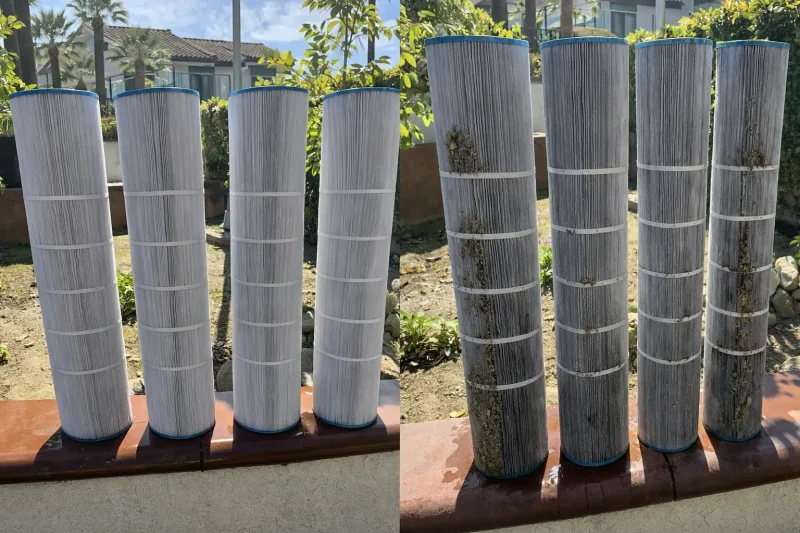
- Cartridges that let water bypass the media
- Multiport and backwash valve problems
- Pressure gauges and air relief valves
We look at the whole system before we blame the filter, including the pump, the valves and the plumbing. Then you get a straight answer on what failed, why it failed, and whether repair or replacement makes more sense for your filter and your budget. If the filter just needs a deep clean, we’ll send you to filter cleaning instead of selling you parts.
We Are Experts With:




How a Pool Filter Fails
Most residential filters are pressure filters. The filter sits right after the pump, in a closed tank, and the pump forces water through it under pressure. That’s what makes filter work risky. Air collects at the highest point in the system, which is usually the filter, and compressed air stores energy. A sudden change in flow can make parts separate violently.
Each filter type also breaks in its own way. Cartridges trap particles down to roughly 10 to 25 microns with pleated fabric. DE filters catch the finest dirt, around 2 to 6 microns, using powder held on fabric grids. Sand filters trap roughly 25 to 100 microns in a bed of sand sitting on slotted laterals. When we know what’s inside your tank, we know which parts to suspect first.
So the first rule is the same every time. Turn the pump off and open the air relief valve before you loosen a clamp, remove a lid or move a valve handle. A tank that blows apart under pressure can seriously hurt someone.
The Parts That Wear Out
The tank itself is usually the last thing to go. The smaller parts fail first:
- O-rings and gaskets between tank halves and under lids
- Clamp bands and locking rings
- Pressure gauges
- Air relief valves and internal air bleed parts
- Laterals and standpipes inside sand filters
- DE grids and the manifold that holds them
- Multiport valve gaskets
Pressure on the media also takes a toll. Over time, filter media can get damaged or pushed out of place, and then water flows back to the pool without being filtered. That’s why the inside of a filter needs a hands-on look now and then, not just a glance at the gauge.
Common Pool Filter Problems We Repair
Leaks at the Lid or Tank O-Ring
Most filter leaks come from the seal between the two tank halves or under the lid. The O-ring flattens, cracks or picks up grit, and water weeps out under pressure. We pull the O-ring, clean the groove, check the clamp or locking ring, and replace what’s worn. When the O-ring looks dry, a silicone-based lubricant helps it seal. A neglected O-ring leads to water loss or air getting into the filter.
Cracked Tanks
A cracked filter tank is not an epoxy job. The tank holds water under pressure, and a patch that lets go can take the lid with it. When the tank body cracks, the fix is a new tank half or a new filter. That’s when we’ll talk through pool filter installation with you.
Sand in the Pool
Sand on the pool floor usually means a broken lateral. Laterals are the slotted fingers at the bottom of a sand filter. Their slots let water through but hold sand back, so one cracked lateral lets sand straight into the return line. We also check the standpipe and hub, and look at whether high filter pressure caused the damage. Sand showing up in the backwash water is a different problem. That can mean a damaged distributor, a backwash rate that’s too high, or the wrong size sand. Most pool sand filters take #20 silica sand, and the wrong grade causes trouble. If the sand itself is worn smooth, that’s a job for sand changes.
DE Blowing Back Into the Pool
A puff of white powder at the returns means DE is getting past the grids. The usual causes are a torn grid, a cracked manifold, a grid that isn’t fully seated, or a damaged air bleed screen. We pull the grid assembly, inspect every grid and manifold port, and replace what’s broken. If you handle DE powder yourself, wear a proper mask. Dry DE can contain crystalline silica, and OSHA’s crystalline silica guidance explains why breathing that dust is a real lung hazard.
Water Getting Past a Cartridge
A cartridge filter can let dirty water through when the element is torn, when it isn’t seated on the center pipe, or when the air strainer is damaged or missing. Flow that’s too high for the cartridge does it too. The water looks cloudy even though the pressure seems fine.
Multiport and Backwash Valve Problems
A multiport valve does several jobs from one handle, so its internal gasket takes a beating. When that gasket wears, water can leak out the waste line during normal filtering, or the valve leaks at the handle. Dirt trapped in the valve causes trouble too, which is why a short rinse cycle between backwash and filter is a good habit. Always turn the pump off before changing the valve position.
Bad Gauges and Air Relief Valves
Gauges fail more often than people think. A gauge that doesn’t read zero with the pump off can’t be trusted, and it can make a clean filter look dirty. A stuck air relief valve is a safety problem, because it’s how you release pressure before opening the filter.
Reading Filter Pressure the Right Way
The gauge is the best diagnostic tool on your pad, as long as you know your baseline. Right after a cleaning, note the pressure. That’s your clean reading. Sand and DE filters usually need attention once pressure rises 8 to 10 psi above it, and cartridges at about 10 psi above.
When Pressure Runs High
High pressure doesn’t always mean dirty media. A blocked return line or a partly closed valve after the filter raises pressure too. So does a pump pushing more flow than the filter is rated for, or pool chemicals fed into the line ahead of the filter. Algae packed into the media is another cause. If pressure stays high right after a good cleaning, something else is going on, and that’s a repair call.
When Pressure Runs Low
Low pressure with weak returns usually points upstream of the filter. A clogged skimmer or pump basket, a closed suction valve, or a damaged impeller all starve the filter of water. Those calls often end as pool pump repair instead.
Why North Texas Filters Wear Out
Heavy Loads From Pollen and Oils
Oak pollen, cottonwood fluff, fall leaves and dust on south winds all end up in the filter. Sunscreen and body oils from a long swim season coat the media too. On a DE filter, too little powder lets those oils clog the grid cloth directly. Flow drops, and over time the grids tear.
Pumps Too Strong for the Filter
A pump upgrade without a filter check can wreck a filter. Flow above the filter’s rating drives dirt and oils deep into cartridges and DE grids. On a sand filter, it forces debris down into the bed where backwashing can’t reach. We check that the pump and filter match whenever we work on either one.
Chemicals Fed Before the Filter
Chlorine tablets in the skimmer, or a feeder plumbed ahead of the filter, send concentrated chemicals straight through it. That shortens filter cycles and raises pressure. Chemicals should feed after all the equipment, including the filter and heater.
Hard Freezes
Water left sitting in a filter tank, valve or pipe can freeze and crack it. The February 2021 freeze showed what happens in North Texas when power and pumps go down for days. After a hard freeze, check the filter and multiport for new cracks before you run the system.
What's Included in Our Pool Filter Repair
Safe Shutdown and System Check
We shut off the pump and bleed the air out before anything opens. Then we inspect the tank, the internal parts, the valves, the plumbing connections, the gauge and the pump. Many filter problems start somewhere else, so we check the whole loop.
Repair With the Right Parts
We repair or replace the failed parts with ones made for your filter model, from O-rings and gauges to laterals, grids and manifolds. On a DE filter, we recharge with the correct amount of powder for the filter’s area. Too little leaves the grid cloth bare, and too much can bridge between grids.
Restart and Pressure Test
We reassemble the filter, restart the system and check for leaks under pressure. Then we record the new clean pressure so you have a baseline. We also double-check your water balance, since filter trouble and chemistry problems tend to travel together. You get a digital service report showing what we found and what we fixed.
Repair or Replace Your Pool Filter?
Repair makes sense when the tank is sound and the failure is a part: an O-ring, a gauge, a lateral, a grid or a valve gasket. Replacement makes more sense when the tank is cracked, parts keep failing one after another, or the filter is too small for the pump in front of it. We’ll explain both options and let you decide.
Why Homeowners Choose Southern Pool + Outdoors for Pool Filter Repair
We find the cause before we replace anything, and we tell you what we found in plain language. You won’t pay for a new filter when a gasket fixes it. Full Service weekly plans also include equipment inspections, so a slow leak or a creeping gauge often gets caught early.
Seeing sand, DE or a drip at the pad? Call (214) 922-1914 or schedule pool filter repair online. You can also see the rest of our pool repairs.
Our Service Areas
- Allen
- Plano
- Dallas
- Mckinney
- Wylie
- Anna
- Fairview
- Prosper
- Lucas
- Celina
- Carlton
- Melissa
Pool Filter Repair Questions From North Texas Homeowners
Here are straight answers to the pool filter repair questions homeowners around North Texas ask most often.
It depends on what broke. An O-ring, gauge or air relief valve is a small repair. Laterals, DE grids and manifolds take more parts and labor. A cracked tank usually means a new tank half or a new filter. We diagnose first and quote second, so call (214) 922-1914 and we'll tell you before any work starts.
It depends on the part. Pool filter sand usually lasts five to 15 years. Cartridges and DE grids are replaceable parts, and how long they last depends on how hard the filter works and how well it's cleaned. The tank often outlasts several sets of cartridges or grids.
The big ones are leaks at the lid or clamp, high pressure that won't come down, sand or DE getting into the pool, and cloudy water from water bypassing the media. Broken laterals, torn grids, cracked manifolds, worn multiport gaskets and bad pressure gauges cause most of them. A pump that's too strong for the filter causes plenty, too.
Find where it's coming from first. With the pump off and the air bled out, check the lid or tank O-ring, the clamp band, the drain plug, the gauge threads and the multiport valve. Clean and lubricate a dry O-ring, or replace it if it's flat or cracked. A leak from the tank body itself means the tank needs replacing.
Old sand gets worn smooth, while new sand has sharp edges that trap dirt. Short filter cycles, cloudy water and pressure that climbs fast after a backwash all point to tired sand. Sand showing up in the pool is different. That usually means a broken lateral, which is a filter repair, not a sand problem.
No. A filter tank holds water under pressure, and an epoxy patch on a crack can fail suddenly and hurt someone. Shut the system off and leave it off until the cracked part is replaced. Sometimes only one tank half needs replacing. Other times a complete new filter makes more sense, and it comes with new media.
DE is getting past the grids. Look for a torn grid, a cracked manifold, a grid that isn't fully seated in the manifold, or a missing or damaged air bleed screen or gasket. Even one small tear lets powder through. The fix means opening the filter, inspecting every grid and port, and replacing the damaged part.
Check the gauge first. If it doesn't read zero with the pump off, it's bad, and gauges fail more often than people expect. A partly closed return valve, a blocked return line or a pump pushing more flow than the filter is rated for also raise pressure. A new gauge is the cheapest place to start.
Probably, but rule out the easy stuff. Confirm the gauge reads zero with the pump off, and check for algae, since it packs into cartridges and raises pressure. If a good cleaning still won't bring pressure back near your clean baseline, or the pleats are matted or torn, new cartridges are the fix.
Check how the new laterals seat in the hub. A lateral that isn't locked in, a cracked hub or a damaged standpipe will still pass sand. Overfilling the filter or using sand that isn't #20 silica can cause trouble, too. Sand has to go back in carefully so the laterals stay in place.
Still have questions?