
Pool Heater Installation in North Texas
Southern Pool + Outdoors handles pool heater installation across North Texas. We help you pick gas or a heat pump, size it to your pool and install it to work with the rest of your equipment. Call (214) 922-1914.

Tired of a pool that's too cold to use half the year? Get a free pool heater installation quote from Southern Pool + Outdoors.
Schedule Service!
A New Heater Is a Whole-System Decision
The heater you buy matters less than how it’s chosen and installed. A heater that’s too small runs for hours and never catches up on a windy March day. A gas heater on a gas line that’s too small starves for fuel, burns dirty and wears out early. And a heater plumbed in the wrong spot can end up with chlorine eating the copper inside it.
North Texas makes the choice interesting. Our summers push pools past where anyone wants heat, so most heating here happens in spring, fall and on cold winter weekends. Strong south winds strip heat off the water surface. Hard fill water scales up heat exchangers. And our winters swing from mild afternoons to hard freezes like February 2021, which is exactly when a heat pump has the least to work with.
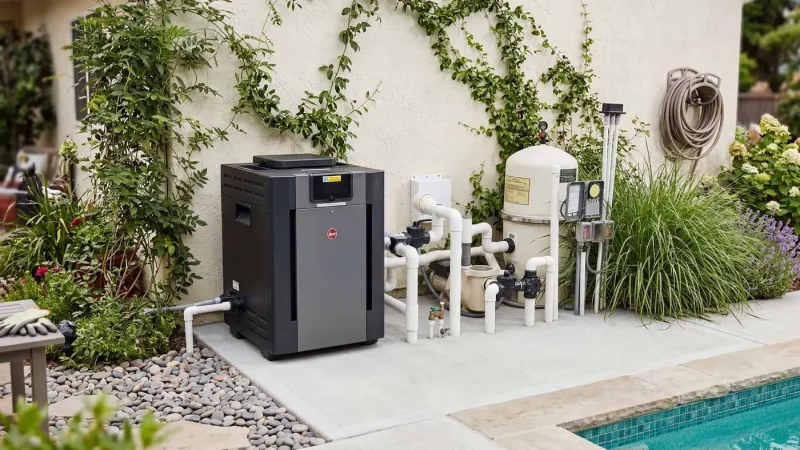
Pool heater installation from Southern Pool + Outdoors starts with your pool and how you use it. We look at the size of the pool, any attached spa, wind exposure, cover use and when you actually want to swim. Then we check what’s already on the equipment pad, from the pump and filter to the gas or electric service. We install natural gas and propane heaters, heat pumps and solar systems, including Pentair, Hayward, Jandy and Raypak equipment.
After the install, we test the system, set the thermostat and verify flow and pressure. If you have automation, we connect the heater to it. Then we walk you through how to run it so you’re not guessing on the first cold morning.
We Are Experts With:




Gas Heater or Heat Pump for a North Texas Pool?
This is the first question nearly everyone asks, and the honest answer depends on how you swim. Both types work here. They just suit different habits.
Gas Heaters
Gas heaters burn natural gas or propane and heat fast, no matter what the air is doing. That makes them the usual pick for attached spas and for families who heat the pool on demand for a weekend or a party. A spa that sits unheated all week and needs to hit temperature in under an hour almost always needs gas.
You can estimate a gas heater’s running cost from your own gas bill. Divide the heater’s BTU rating by 100,000 to get therms per hour. A 400,000 BTU heater burns about 4 therms an hour at full fire, and your bill shows the price per therm. Natural gas is lighter than air and vents away if it leaks. Propane is heavier than air and can pool at the bottom of a heater, which is one more reason gas work belongs with a qualified technician. If your home doesn’t have natural gas, propane is the fallback, so tank size and delivery cost become part of the decision.
Heat Pumps
A heat pump doesn’t make heat. It moves heat from the outside air into the pool water using a refrigerant and a compressor. That’s why it’s so efficient. Engineers rate heat pumps by their coefficient of performance (COP), the heat delivered for each unit of electricity used. Electric resistance heaters run a COP of 1, while a typical heat pump runs about 3 or higher.
The catch is cold air. With less heat in the air, a heat pump has less to move. The Department of Energy says heat pump pool heaters work efficiently as long as the outside air stays above roughly 45°F to 50°F. In North Texas that covers most of spring and fall, but not our coldest January mornings. Heat pumps also heat slowly. They’re best for holding a steady temperature over weeks, not for warming a cold spa on short notice. Models with scroll compressors put out more heat at lower air temperatures and run quieter than older designs.
Solar and Electric Heaters
Solar panels add heat for free once they’re installed, and they work well here in spring and fall. They need roof or yard space, and the panel area usually runs from about half to more than the full surface area of the pool. Panels facing south collect the most heat. Most solar systems pair with a gas heater or heat pump for cloudy stretches. Electric resistance heaters are simple, but they cost a lot to run and heat slowly. We usually see them only on small spas.
How We Size a Pool Heater
Sizing is where most bad installs start. A heater that’s too small has a long heat rise and may never reach your set point in cold weather. A heater that’s bigger than you need costs more up front. The goal is the right size for how you actually use the pool.
The BTU Math
One BTU raises one pound of water by one degree, and a gallon of water weighs 8.33 pounds. So the heat needed to warm a pool from cold is simple math: gallons times 8.33 times the temperature rise you want. A 20,000 gallon pool needs about 166,600 BTUs for every degree. Raising it 10 degrees takes about 1.67 million BTUs, before counting any heat the pool loses along the way.
A spa works the same way, just with far less water. That’s why a gas heater can warm an attached spa in a fraction of the time it takes to warm the pool. For a pool you plan to keep warm all season, surface area matters more than volume, because the surface is where the heat leaves.
Heat Loss Decides the Rest
Holding a pool at temperature takes much less energy than the first heat-up, but only if you control heat loss. Evaporation causes about half of all heat loss from a pool. Heat radiating to a clear night sky accounts for another 20% to 30%, and wind blowing across the water takes 15% to 25%. Very little leaves through the pool walls.
Wind is the big local factor. Our south winds increase both evaporation and convection, so an open pool on a windy lot needs more heater than a sheltered one. A cover cuts most of these losses at once, since evaporation, radiation and convection make up about 95% of the heat a pool loses. That’s why one of our first questions is about a cover.
What Feeds the Heater and Where It Sits
Most install surprises come from three places: the gas meter, the electrical panel and a cramped equipment pad. We check all of them before we quote.
Gas Supply
A gas heater needs a meter and gas line big enough to deliver its full rating, often with other gas appliances running at the same time. Plenty of homes have a standard gas meter that’s too small for a large pool heater. An undersized line starves the burner, which leads to low gas pressure, soot, poor heating and early damage. We check the meter and the line run before we recommend a size, because a gas line upgrade can change the whole budget.
Electrical Service for Heat Pumps
A heat pump needs its own electrical circuit, sized to the unit’s specifications. On some homes that means a long run from the main panel or a panel with no room left. We look at your electrical service during the quote so you know about any upgrade before the install starts.
Placement and Clearances
A heater belongs on a level, noncombustible base, such as a concrete pad. It needs the clearances its manufacturer lists for walls, windows and vents. A gas heater should sit at least five feet from the inside wall of a spa unless a fence, wall or other permanent barrier separates them. On windy sites, the heater needs either about three feet of space from the nearest wall or a wind block, and some need a high wind stack on the vent. We also keep heaters away from sprinkler spray and roof runoff, which can put out pilots and rust cabinets.
How the Heater Ties Into Your Equipment Pad
Plumbing order matters more than most people realize. The heater goes after the pump and filter, so it only sees clean, filtered water. Every chemical feeder and chlorinator goes after the heater. A tablet feeder upstream sends concentrated chlorine through the heat exchanger and corrodes it.
Check valves protect both sides. One between the filter and the heater keeps hot water from flowing back and warping filter parts when the pump shuts off. Another between the heater and any chemical feeder keeps chemicals from draining back into the heater. Some heaters also need a bypass valve to control how much water flows through them, and we set it to the manufacturer’s spec.
On systems with a timer, we wire a fireman switch. This low-voltage switch shuts the heater off before the pump stops, so water keeps moving while the heater cools. A new heater also changes the resistance the pump has to push against. We recheck flow after the install so the pump, filter and heater all run where they should. If your pump can’t move enough water for the new heater, we’ll tell you about pool pump installation options before the heater goes in.
Pool Heater Replacement: When It's Time
Not every tired heater needs replacing. A heater that won’t fire often needs a pressure switch, an igniter or a cleaner filter, and our pool heater repair page covers those fixes. Pool heater replacement starts to make sense in these cases:
- The heater is more than 8 to 10 years old and needs a major repair
- Heating takes much longer than it used to
- The heater won’t stay lit or keeps shutting off
- The heat exchanger leaks or shows internal corrosion
- You’re adding a variable-speed pump or automation
- You’re switching between propane and natural gas
When we replace a heater, we look at why the old one died. Low pH, scale, a chlorinator plumbed before the heater and a starved gas line all kill heaters early. Fixing the cause keeps the new heater from going the same way.
What Our Pool Heater Installation Includes
Every install follows the same steps:
- A consultation covering your pool, spa, swim habits, pump, filter, gas or electric service, automation and pad layout
- Help choosing between gas, propane, heat pump and solar, with the trade-offs explained in plain terms
- Plumbing the heater into your system in the right order, with gas or power connected safely
- Testing, thermostat setup and a flow and pressure check
- Setup with Pentair, Hayward or Jandy automation when your system has it
- A walkthrough on setting temperatures and running the heater efficiently
Once the heater is in, we can keep it healthy through routine service, seasonal checks and filter cleanings.
Why Homeowners Choose Southern Pool + Outdoors for Pool Heater Installation
We size heaters to your pool and your habits, not to the biggest box on the shelf. We check your gas line, electrical service and plumbing before quoting, so the price you see covers what the job needs. And we install the heater in the right spot in the system, with the check valves and settings that keep it running for years. Heaters are one of several pool equipment installations we handle, so we look at the whole pad while we’re there.
If you’re ready to swim more months of the year, call (214) 922-1914 or schedule pool heater installation online.
Our Service Areas
- Allen
- Plano
- Dallas
- Mckinney
- Wylie
- Anna
- Fairview
- Prosper
- Lucas
- Celina
- Carlton
- Melissa
Pool Heater Installation Questions From North Texas Homeowners
Here are straight answers to the pool heater installation questions homeowners around North Texas ask most often.
It depends on the heater type and size, and on what it takes to feed it. Running a new gas line from the meter or adding an electrical circuit can add a big piece to the total. Plumbing changes and automation add to it. We check your gas and electric service first, then give you a quote. Call (214) 922-1914.
The plumbing is doable for a handy homeowner, but the gas, venting and electrical work is not. A bad gas connection or poor venting can lead to a fire or an explosion. Clearances also have to match the manufacturer's manual. We recommend a qualified installer for any gas heater or heat pump wiring.
Warming 20,000 gallons takes about 166,600 BTUs per degree, since each gallon weighs 8.33 pounds. A 10 degree rise needs roughly 1.67 million BTUs before heat loss. A 400,000 BTU gas heater gets there in several hours. Wind, cover use and how fast you want heat decide the right size for your pool.
Yes. Most existing pools can take a heater. It goes on the equipment pad after the pump and filter and before any chlorinator. You need a gas line or an electrical circuit sized for the unit, plus a level spot with proper clearances. We also confirm your pump moves enough water to run the new heater.
Cheapest to buy and cheapest to run are different answers. Gas heaters usually cost less up front than heat pumps. Heat pumps cost less to run in mild weather because they move heat instead of burning fuel. Solar has no fuel cost once it's installed. The cheapest heater overall is the one sized right and paired with a cover.
Size it to how fast you want heat. A North Texas owner with a 16,500 gallon pool asked this on TroubleFreePool. Replies said a 400,000 BTU gas heater heats fastest, but many homes have a gas meter too small for it. Check the meter and gas line first. A cover makes any size heater work better.
It depends on your electric rate and when you heat. A Dallas owner on TroubleFreePool weighed both after a gas quote climbed because of a new gas line. Heat pumps cost less per unit of heat in mild weather, but they lose output in cold air. Compare using your own rates, and plan for a dedicated circuit.
For many families, yes, mainly in spring and fall. A Flower Mound owner asked this on TroubleFreePool, and local replies agreed it comes down to how you swim. Heating a spa is easy to justify. Heating the whole pool costs more, so a cover and realistic expectations about January swims matter.
Gas, in most cases. An Austin owner with an attached spa asked this on TroubleFreePool. Replies said heat pumps are slow and steady while gas is close to instant. If you want the spa hot in under an hour, choose gas. Heat pumps suit holding the pool warm through spring and fall.
Yes. A TroubleFreePool thread on a 400,000 BTU heater running on a gas line too small for it agreed it would cause trouble. Starved burners lead to soot, poor heating, noise and damaged parts over time. Raising pressure at the regulator won't fix it. The fix is a properly sized line and meter.
Still have questions?