
Green to Clean Pool Service in North Texas
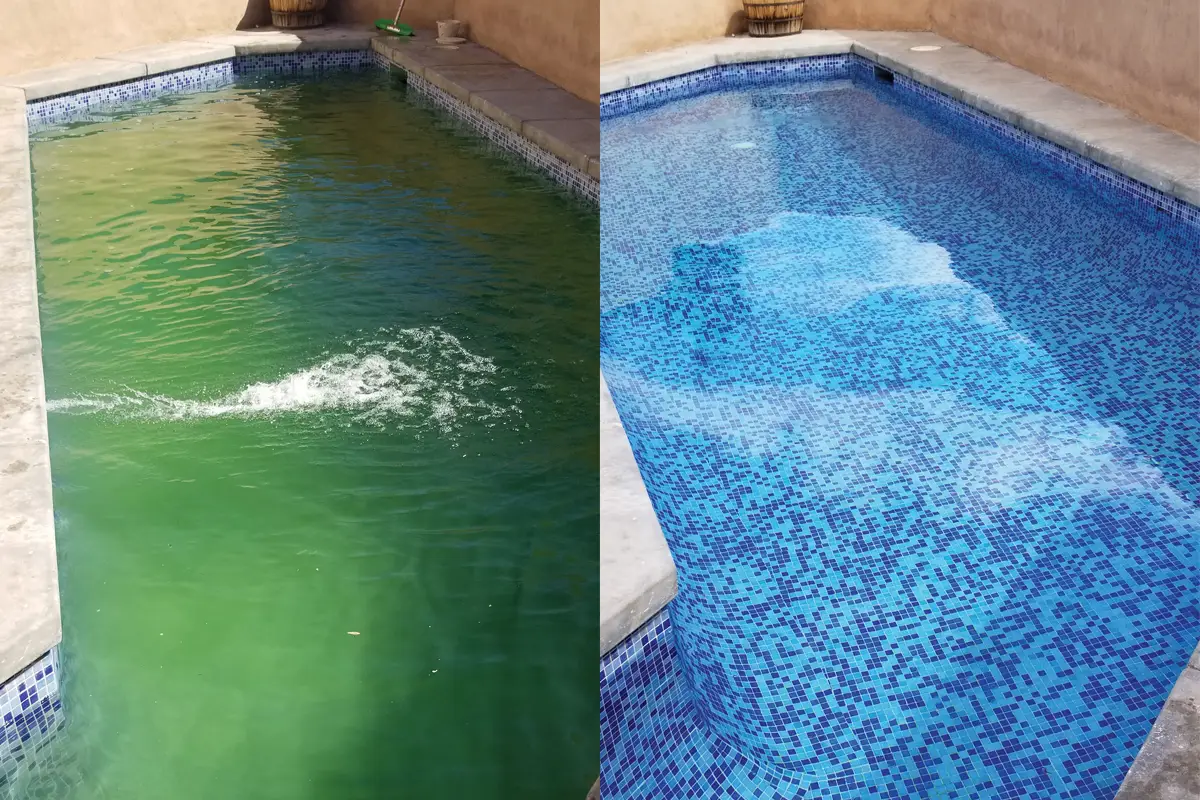
Southern Pool + Outdoors handles green to clean pool recovery across North Texas. We find out why the pool turned, kill the algae with the right chemicals, brush every surface, clean the filter and bring the water back to balance. Call (214) 922-1914.

Pool turned green after a storm or a few weeks away? Get a free green to clean quote from Southern Pool + Outdoors.
Schedule Service!
Why North Texas Pools Turn Green So Fast
Algae spores blow into every outdoor pool, every day. They only take over when the chlorine runs low. In warm water with sunlight and food, some algae reproduce fast enough to turn a clear pool green in less than a day. A North Texas summer gives them all three.
Most green pools here start the same few ways. The pump stops or runs short hours. Chlorine burns off during a string of 100°F afternoons. A spring storm washes dirt, fertilizer and oak pollen into the water. Or the family leaves for two weeks and nobody adds chlorine. Pucks can cause it too, because they slowly raise the stabilizer until normal chlorine levels can’t keep up.
Our Green to Clean recovery package uses chemicals, brushing and filter cleaning to bring a green pool back to clean, swimmable water. We start by figuring out what caused it, since a pool cleared without fixing the cause usually turns again. Then we work the pool through these steps:
- Testing the water and checking the pump and filter
- Raising chlorine high enough to kill the algae
- Brushing walls, steps and floor
- Cleaning the filter as the dead algae comes out
- Rebalancing the water once it’s clear
A green pool almost always means the filter took a beating too, which is why the package includes cleaning it. If the filter itself needs a deeper service, our filter cleaning page explains what that involves. Once the pool is clear, weekly pool service is the best way to keep it from going green again.
We Are Experts With:




What's Actually Going On in a Green Pool
A green pool is an algae bloom. Algae are one-celled plants, and pool water has nearly everything they need to grow. Carbon comes from the alkalinity in the water. Nitrogen and phosphorus come from swimmers, leaves, fertilizer, bird droppings and dead algae. Sunlight and warm water do the rest. The only thing standing in the way is chlorine, and when it hits zero, the bloom starts.
The Types of Algae in North Texas Pools
Green algae is by far the most common type, and it’s also the easiest to kill. It floats in the water and coats the walls with slime. Black algae grows in spots with poor circulation, like deep corners and behind steps, and it digs into plaster. Mustard algae, also called yellow algae, shows up as yellow-brown dust on shady walls and often needs a specially made algaecide.
Most of our green to clean jobs are plain green algae. Black spots and mustard dust need extra brushing and more time, so we point them out at the first visit.
When Green Water Isn't Algae
Not every green pool has algae in it. Cloudy green water is usually algae. Green water you can still see through clearly is often copper, which can come from a corroding heater or from copper algaecides. Dumping heavy chlorine into copper water can stain the plaster, so the treatment is different.
That’s why we test before we treat. If the water shows metals, we treat the metals first. Water that looks green but still shows plenty of chlorine is a clue that something else is going on, like iron in the fill water.
Is a Green Pool Dangerous?
Algae by itself usually isn’t what makes people sick. The real danger is that cloudy green water hides the bottom of the pool. If you can’t see the main drain from the deck, you can’t see a child who slipped under. Algae on steps and the floor is also slippery, and it can shelter bacteria that chlorine would normally kill.
Then there’s the equipment. Algae and debris clog the filter, the pump works harder, and flow drops. Algae left too long can also stain plaster. Keep everyone out of the water until it’s clear, balanced and you can see the drain from the deck.
How We Take a Pool From Green to Clean
Every recovery follows the same order, adjusted for how green the pool is and what caused it.
Test the Water and Find the Cause
We test chlorine, pH, alkalinity, stabilizer and metals, and we check the pump, filter and skimmer. A pump that won’t prime, a timer set to run two hours a day, or a filter packed solid all need fixing before the chemicals can work. If the pump is the problem, pool pump repair comes first.
Raise the Chlorine and Hold It
Killing algae takes chlorine well above the normal level, and the right number depends on the stabilizer. Stabilizer, or cyanuric acid, protects chlorine from the sun. Without any, sunlight can destroy half the chlorine in your water in under an hour. With too much, chlorine still works, but slowly, so it takes a much higher dose to kill a bloom. We set the dose for your stabilizer level and keep it there until the algae is gone. Dropping chlorine back too soon is how blooms come back.
pH matters here too. The CDC notes that pH that’s too high or too low makes chlorine less effective at killing germs. So we keep pH in range while the chlorine does its work.
Brush Every Surface
Algae clings to walls, steps, benches and the floor. Brushing breaks it up so the chlorine can reach it, and it knocks loose the slime layers where bacteria hide. Bacteria inside that slime, called biofilm, can need a disinfectant level 100 times higher to kill. Brushing is the cheapest fix in the whole process, and skipping it adds days.
Clean the Filter as Dead Algae Comes Out
Once algae dies, it turns the water gray or cloudy blue, and all of it has to go through the filter. That load clogs filters fast. We clean the filter as pressure climbs, and again once the water clears. Dead algae left in the media still holds nutrients that can feed the next bloom.
Running the pump nonstop speeds this up. One turnover of the water filters only about 63% of it, and it takes four turnovers to filter all but 2%. A pump that runs a few hours a day can’t keep up with a recovery.
Rebalance the Water
When the water is clear and the chlorine holds steady overnight, we bring everything back to normal. That means balancing pH, alkalinity and calcium, and setting stabilizer at a level your chlorine can work with. Then the pool is ready to swim.
What to Expect While Your Pool Clears
The color changes in stages, and knowing them saves a lot of worry. Live algae is bright or dark green. Once it dies, the water turns gray, then a cloudy blue. That cloudy stage is dead algae waiting for the filter, and it can last a few days. It looks bad, but it means the treatment is working.
During that stretch, the chlorine level tells the real story. If chlorine keeps dropping fast, algae is still alive somewhere, often in the filter, behind a light or under a step. We keep testing, brushing and adding chlorine until it holds steady overnight. The last check is simple. Stand on the deck and look at the main drain. If you can see it sharply, the water is close to done.
Do You Need to Drain a Green Pool?
Most green pools clear without draining. Chlorine, brushing and filtration handle the algae, and the water you already have is fine once it’s treated. Draining also carries risk. An empty pool on wet ground can crack or lift as groundwater pushes on the shell.
Draining makes sense in a few cases. Stabilizer may be so high that chlorine can’t do its job at any reasonable dose, which is common after years of pucks. The pool may be a swamp of rotting leaves. Or the plaster needs work anyway. For those pools, our Drain & Clean service covers draining the pool, a chlorine wash, equipment and filter cleaning, refilling and chemical rebalancing. Partial drains work well for high stabilizer too, since replacing a third to half of the water brings it down without emptying the shell.
Why Green Pools Happen in North Texas
Local weather hands algae more chances than most places get.
Heat and Long Summers
Chlorine burns off fast under strong summer sun, and warm water helps algae grow. In July and August, a pool that held chlorine fine in May can run dry in a day or two. Pumps on short summer schedules or broken timers lose that race quickly.
Spring Storms and Runoff
Heavy spring rain dilutes chlorine and washes in dirt, mulch and lawn fertilizer. Fertilizer is full of phosphorus and nitrogen, both algae food. Oak pollen in spring and cottonwood fluff add more. After a big storm, check the chlorine the same day, and run the pump through the weather.
Shade and Dead Spots
Algae grows best where water barely moves. Deep corners, the area behind steps, benches and spots under a tree that stay shady all afternoon are where blooms tend to start. Live oaks and cedar elms drop leaves that sink and rot in those same corners, which feeds the algae even more. Aiming the return jets to keep water moving and brushing those spots every week does more than most products.
Pucks and Rising Stabilizer
Trichlor pucks are convenient, but every puck adds stabilizer that stays in the water. Over a season or two, stabilizer climbs until normal chlorine levels can’t keep algae down. A lot of the green pools we see in late summer are puck pools. A partial drain is the most practical way to lower it.
Keeping a Pool From Going Green Again
It is far easier to prevent algae than to remove it. Keep chlorine in range every day, keep the pump running long enough for proper turnover, and brush the walls every week. Clean the filter on schedule and check the chlorine after storms and heat waves.
Algae also stores phosphorus inside its cells, so phosphate removers alone won’t stop a bloom if the chlorine drops. Steady chlorine is what keeps algae out.
If you’d rather not track it, our weekly pool service handles it with a dedicated route technician and a digital service report after every visit. Stains left behind after a bad bloom sometimes need an acid wash once the water is clear, and we’ll tell you if yours does.
Why Homeowners Choose Southern Pool + Outdoors to Clear a Green Pool
We test before we treat, we fix the cause along with the algae, and we don’t leave until the water is clear and balanced. You don’t need to be home while we work, as long as we can reach the pool and equipment.
If your pool is green, cloudy or starting to slime up, call (214) 922-1914 or schedule green to clean service online. You can also see our other specialty services for jobs a weekly visit can’t cover.
Our Service Areas
- Allen
- Plano
- Dallas
- Mckinney
- Wylie
- Anna
- Fairview
- Prosper
- Lucas
- Celina
- Carlton
- Melissa
Green to Clean Questions From North Texas Homeowners
Here are straight answers to the green to clean questions homeowners around North Texas ask most often.
Raise the chlorine well above normal for your stabilizer level, keep it there, brush every surface, and run the pump around the clock. Clean the filter as pressure climbs. There's no product that skips those steps. In a North Texas summer, test chlorine at least twice a day during treatment, because heat and sun burn it off fast.
Most green pools clear in several days to about a week. A light green pool with a clean filter goes faster. A dark green pool, high stabilizer, a weak pump or a small filter all slow it down. The water usually turns from green to cloudy blue before it clears, and the filter does most of the work after that.
No. Algae itself rarely makes people sick, but green water hides the bottom, so nobody can see a swimmer in trouble. Algae also makes steps slippery and can shelter bacteria. Stay out until the water is clear, the chlorine holds steady, and you can see the main drain from the deck.
Yes, in most cases. Chlorine, brushing and filtration clear the algae, and the water stays in the pool. Draining makes sense when stabilizer is extremely high, the pool is full of rotting debris, or the plaster needs work anyway. Draining also carries risk in North Texas, since wet ground can push on an empty shell.
Yes. Chlorine kills algae when the level is high enough for the stabilizer in the water, and it stays up until the algae is gone. If trichlor pucks pushed stabilizer very high, chlorine struggles and a partial drain may come first. Shock that drops back to zero overnight won't finish the job, so steady chlorine matters more than one big dose.
Not yet. Check that chlorine stayed at shock level the whole time, since letting it drop restarts the clock. Test for high stabilizer and for metals, because iron can look green too. Then look at the filter, which may be clogged with dead algae. Draining is the last step, and a partial drain often fixes high stabilizer.
Rain dilutes chlorine and washes in dirt, pollen and fertilizer, which feed algae fast in warm water. Some pools also take in runoff when the yard slopes toward the pool. After a North Texas spring storm, test chlorine the same day, run the pump, and raise chlorine before the water turns. Watch where runoff enters the pool, too.
Usually only part of it. Stabilizer doesn't filter out, so the practical fix is replacing some of the water. Replacing a third to half of the water lowers it in proportion, and very high levels may take two rounds. In the heat, keep partial drains short and refill quickly. Rain helps a little when it overflows the pool.
Keep filtering in most cases. Floc clumps dead algae so it sinks, but then it has to be vacuumed to waste, which costs water and time. It only works after the algae is fully dead. Steady chlorine, brushing, and a clean filter running around the clock clear most North Texas pools without it.
Your filter will catch most of it if you keep the pump running and clean the filter as pressure rises. Brush the dust off the floor so it gets pulled into the filter. Vacuuming to waste helps when a thick layer settles on the bottom, though it means refilling and rebalancing. Clean the filter again once the water is clear.
Still have questions?