
Pool Salt Systems in North Texas
Southern Pool + Outdoors handles pool salt systems across North Texas. We install salt chlorine generators, convert chlorine pools to salt, clean scaled cells and repair systems that stopped making chlorine. Call (214) 922-1914.

Salt cell flashing a warning or chlorine reading zero? Get a free pool salt systems quote from Southern Pool + Outdoors.
Schedule Service!
How Pool Salt Systems Make Your Chlorine
A salt pool is still a chlorine pool. The difference is where the chlorine comes from. Instead of pouring in jugs or dropping pucks in a floater, you dissolve salt in the water once, and a salt chlorine generator turns it into chlorine every time the pump runs.
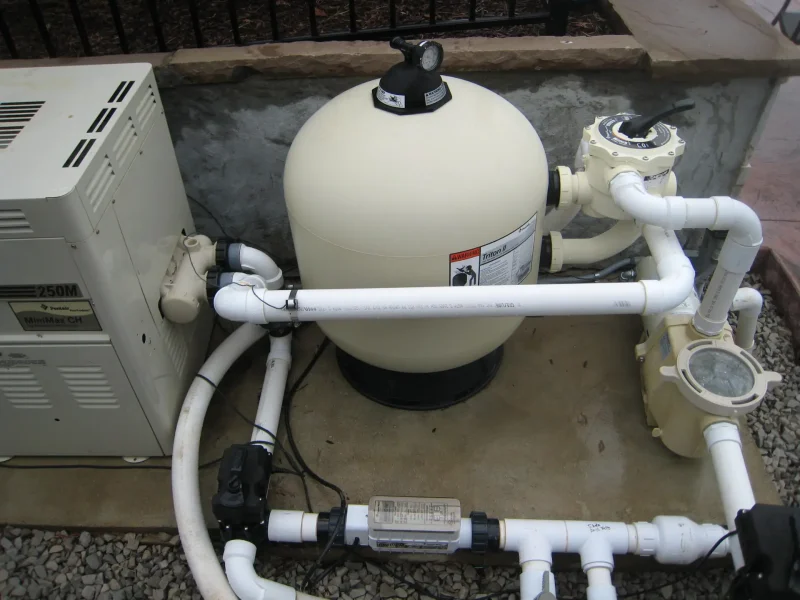
The generator has two parts. A control box sits on the equipment pad, and a cell sits in the plumbing after the filter. The cell holds a stack of metal plates. When salty water flows between them and the plates are charged, the salt splits and chlorine forms right in the line. That chlorine does its job, turns back into salt, and the cycle starts over. You only add salt to replace what leaves the pool through splash out, backwashing and rain overflow.
Most systems run at 3,000 to 3,500 ppm of salt. That’s roughly a tenth of the salt in seawater, low enough that most people barely taste it.
Pool salt systems from Southern Pool + Outdoors cover:
- New salt chlorine generator installs
- Converting a chlorine pool to salt
- Salt cell cleaning and scale removal
- Diagnosing and repairing systems that stopped producing chlorine
- Testing and balancing salt, pH and the rest of the water
Salt systems aren’t hands off, though. The cell raises pH, and North Texas hard water puts scale on the plates. Both are easy to manage once you know they’re coming. Salt cell cleaning is also available as an add-on to our weekly pool service, so the cell gets checked on a regular schedule.
We Are Experts With:




How a Salt Chlorine Generator Works
Every salt system works the same way at the cell, no matter whose name is on the box. Knowing what happens inside it explains almost every problem a salt pool owner runs into.
The Cell and Electrolysis
The control box sends low voltage power to the plates in the cell. As salt water passes between the charged plates, the salt and water react through electrolysis. The reaction makes chlorine, sodium hydroxide and a small amount of hydrogen gas. The chlorine and sodium hydroxide dissolve into the water, and the hydrogen escapes into the air.
Because of that hydrogen, the cell is wired so it shuts down whenever the pump is off. A flow switch or sensor tells the control box that water is moving. No flow, no chlorine. That’s a safety feature, and a bad flow switch is one of the most common reasons a cell stops working.
Why pH Keeps Climbing in Salt Pools
Sodium hydroxide is the same chemical sold as caustic soda for raising pH. So every hour the cell runs, it pushes pH up a little. The hydrogen bubbles stir the water as they escape, and that aeration pushes pH up too. That’s why salt pool owners add acid more often than people expect.
Rising pH matters because chlorine works poorly at high pH, and high pH makes scale. Lower total alkalinity slows the climb. A steady schedule of small acid doses keeps pH in range without big swings.
Output Settings and Pump Run Time
The output setting on the control box is a percentage of time. At 50%, the cell makes chlorine for half of every hour the pump runs. So output and pump hours work together. Pump speed doesn’t change how much chlorine the cell makes, as long as there’s enough flow to keep the flow switch closed. That’s handy with a variable speed pump, which can run slow for long hours and give the cell plenty of time to work.
In summer the pool burns more chlorine, so the cell needs more hours. In spring and fall, the same settings can push chlorine too high. We adjust output with the seasons and check the reading at every visit.
Salt Levels and Testing
Most cells want 3,000 to 3,500 ppm of salt, and some are designed for higher levels. To reach 3,000 ppm from fresh water, you need at least 250 pounds of salt for every 10,000 gallons. Too little salt and output drops. Many cells shut off and flash a warning. Too much salt can stress the cell and add to corrosion problems.
Newer control boxes read salt and adjust their output automatically, and many flash a light when salt falls out of range. Those readings drift as the cell ages, though. We confirm salt with a separate test before adding a single bag.
Salt Systems and North Texas Hard Water
Hard water is the biggest challenge for pool salt systems here. Fill water across North Texas carries plenty of calcium, and summer evaporation concentrates it with every top-off.
Scale on the Cell Plates
Calcium scale forms where pH runs high, and the inside of a salt cell is one of those places. Right at the plates, pH climbs faster than in the rest of the pool. White crust builds between the plates, blocks the flow and cuts chlorine output. Left alone, it shortens the life of the cell.
Most cells periodically reverse the charge on their plates to shed scale before it builds. That helps, but it can’t keep up with water that’s out of balance. Keeping calcium in the 200 to 400 ppm range, pH in check and the saturation index slightly on the low side keeps scale off the plates. When calcium climbs past 500 ppm, the pH and alkalinity need extra attention.
Cleaning a Salt Cell
A cell only needs cleaning when you can see scale on the plates. First, we try to knock it loose with a plastic tool and a hose. If hard scale stays, the cell gets a short soak in a mild acid solution, following the maker’s directions. Acid strips scale, but it also wears the coating on the plates. So we never acid clean a cell on a schedule, only when it needs it. The best cleaning is the one you never have to do because the water stayed balanced.
A Salt Pool Still Needs Stabilizer
Salt pools still need stabilizer, also called cyanuric acid. Sunlight destroys chlorine fast. In water with no stabilizer, half the chlorine can disappear in under an hour on a sunny day. Stabilizer protects it, so the chlorine lasts several times longer.
That matters even more with salt, because the cell only makes chlorine while the pump runs. If the sun burns it off by noon, the pool sits unprotected until the next run. We test stabilizer and set it at a level your cell can work with. In a North Texas July, the cell output and pump schedule usually need to go up too.
A salt pool can still turn green. If the cell is scaled, the salt is low or the output is set too low for August, chlorine drops to zero and algae moves in the same as any other pool. Brushing, a clean filter and a chlorine test a couple of times a week still apply. After a big spring storm, check the chlorine the same day, because rain dilutes both the salt and the chlorine.
Salt cells also pair well with automation. A pool automation system can run the cell on the pump schedule and cut output when you switch to the spa.
Protecting Stone and Metal Around a Salt Pool
Salt gets blamed for a lot of damage around pools. Some of that blame is fair, and some belongs to bad water balance.
Stone Coping and Decking
Salt water that splashes onto natural stone dries and leaves salt crystals in the pores. Some soft stones flake or turn sandy over time. Others hold up for years. Stone quality matters most, and sealing natural stone and rinsing the coping now and then help. Keep in mind that every pool collects salt over time from chlorine, acid and fill water, salt cell or not.
Metal and Heaters
Salt water carries electricity better than fresh water. When two different metals sit in the same water, the more active one can corrode. That’s galvanic corrosion, and it’s why proper bonding and the right metal parts matter in salt pools. Low pH makes all metal corrosion worse, and it’s the more common culprit. Pentair notes that salt can damage some heaters, fixtures, lighting and masonry, so check that your heater and other equipment are rated for salt before converting.
Our Pool Salt Systems Services
We install, service and repair salt chlorine generators on residential pools.
Installation and Conversions
Converting a chlorine pool to salt starts with your equipment. We check the pump, filter, plumbing and electrical, and we confirm the heater and other parts can handle salt. Then we size the cell to your pool’s volume, install it after the filter and heater, and wire it so it only runs with flow. Once the salt is dissolved and the water is balanced, we set the output and show you how to read the control box.
Salt System Repair
When a cell stops producing chlorine, the usual causes are scale, low salt, a failed flow switch, a bad sensor, a wiring problem or a cell at the end of its life. Error codes point in the right direction, but they don’t always name the real cause. We test each part before replacing anything. A cell that’s simply worn out won’t come back with cleaning, and we’ll tell you when replacement is the cheaper fix.
When a Salt Cell Wears Out
Cells don’t last forever. The plates carry a coating that wears a little every hour the cell runs, and every acid cleaning takes some too. Pentair rates the cells in most residential salt pools at about 10,000 hours of operation, roughly three to five years depending on care and water chemistry. Signs of a cell near the end include output that keeps falling, salt readings that drift low and plates that look bare or patchy. Hard water and frequent acid cleanings shorten that life, which is one more reason to keep the water balanced.
Signs Your Salt System Needs Service
Watch for these:
- Chlorine reading low even with output turned up
- A check cell, low salt or no flow light
- White crust visible inside the cell
- pH climbing faster than usual
- Salt readings that don’t match a separate test
If more than one shows up at once, call before the pool turns green.
Why Homeowners Choose Southern Pool + Outdoors for Salt Systems
We test before we sell you a cell, we balance the water so scale stays off the plates, and we tell you when a repair isn’t worth it. You get a digital service report with chemical readings after every visit, and you don’t need to be home as long as we can reach the pool and equipment.
If your salt cell is acting up or you’re ready to convert, call (214) 922-1914 or schedule salt system service online. You can also see our other specialty services for jobs a weekly visit can’t cover.
Our Service Areas
- Allen
- Plano
- Dallas
- Mckinney
- Wylie
- Anna
- Fairview
- Prosper
- Lucas
- Celina
- Carlton
- Melissa
Pool Salt Systems Questions From North Texas Homeowners
Here are straight answers to the pool salt systems questions homeowners around North Texas ask most often.
For most owners, yes. A salt system makes chlorine steadily every time the pump runs, so you stop hauling jugs or buying pucks. The water also feels softer. The tradeoffs are the upfront cost, regular acid for rising pH, and cell cleaning in hard water. In North Texas, plan for scale and keep calcium in check.
The main downsides are cost and upkeep you might not expect. The cell is an upfront expense and wears out over time. pH climbs steadily, so you add acid more often. Hard North Texas water scales the cell. Salt can also be hard on soft natural stone and some metal parts if the water isn't kept balanced.
It depends on the size of your pool, which cell fits it, and how much plumbing and electrical work the pad needs. Pools with automation can often run the cell from the existing panel. Converting also means buying the salt itself. Call (214) 922-1914 and we'll look at your equipment and give you a quote.
Only when a test shows it's low. Salt doesn't get used up, because the chlorine turns back into salt. You lose it through splash out, backwashing, draining and rain overflow. In North Texas that usually means a few bags after heavy spring rain or a partial drain. Confirm with a salt test before adding.
Starting from fresh water, you need at least 250 pounds of salt to reach 3,000 ppm in 10,000 gallons. With 40 pound bags, that's about seven bags. If the pool already has some salt, test first and add only the difference. Pour it in the deep end with the pump running and brush until it dissolves.
Yes. The cell makes sodium hydroxide along with chlorine, and sodium hydroxide raises pH. The hydrogen bubbles from the cell also stir the water, which pushes pH up further. Keeping total alkalinity on the lower side slows the climb. Most salt pools in North Texas need small, regular doses of acid to stay in range.
Only when you see scale on the plates. Check the cell every few months, and more often in summer. If the plates have white crust, try a hose and a plastic tool first. Use a mild acid soak only when scale won't come off, because each acid cleaning wears the cell. Balanced water means fewer cleanings.
Usually because calcium, pH or alkalinity is running high. pH rises faster inside the cell than in the rest of the pool, so scale forms there first. North Texas fill water adds calcium with every top-off. Lowering alkalinity, keeping pH in check and watching calcium levels slows scaling. Some homeowners soften the fill water.
It can, but stone quality matters more than the salt cell. Soft flagstone can flake or turn sandy as salt dries in its pores, and some flagstone does that even without salt. Sealing natural stone and rinsing the coping now and then help. Every pool picks up some salt over time, salt cell or not.
They can, mostly when the water is out of balance. Low pH is the bigger cause of metal corrosion. Salt water also carries current better, so different metals in contact can corrode faster. Proper bonding, salt rated equipment and balanced water prevent most problems. Rinse metal furniture that gets splashed regularly.
Still have questions?