
Pool Pump Installation in North Texas
Southern Pool + Outdoors handles pool pump installation across North Texas. We size the new pump to your plumbing and filter, install and wire it, set up variable-speed schedules, and test flow before we leave. Call (214) 922-1914.

Old pump loud, leaking or costing too much to run? Get a free pool pump installation quote from Southern Pool + Outdoors.
Schedule Service!
Pool Pump Installation Sized for Your Pool
A new pump only pays off if it fits the system it’s joining. The pump has to match your plumbing, your filter, your spa jets and water features, and the voltage at your equipment pad. Get that wrong and you end up with a pump that’s either too weak to run the spa or strong enough to push dirt straight through the filter.
Our pool pump installation work covers both replacements and new equipment pads:
- Replacing a worn-out or failed pump
- Upgrading an old single-speed pump to variable-speed
- Two-speed pumps for smaller systems
- Plumbing and electrical connections at the pad
- Priming, startup and flow testing
- Speed schedules and automation setup
For most pools, we recommend a variable-speed pump. It can run slow and quiet for filtering, then speed up for the spa, a waterfall or a cleaner. In a place where pumps run long hours from spring through fall, that slow speed is where the savings live. And because a new pump has to catch prime and push air out of the system on day one, startup is part of the job, not an afterthought. Our tech stays until the basket is full, the air is out and the flow looks right.
We don’t push the biggest pump on the truck. We look at your pool’s size, pipe sizes, filter rating and the features you actually use, then recommend a pump that fits. Your filter matters too, since a new pump and an old filter have to work together. If your current pump only needs a seal or a capacitor, we’ll tell you that too and send you to pool pump repair instead.
We Are Experts With:




Pool Pump Replacement: When a New Pump Makes Sense
Plenty of pumps can be fixed. A failed capacitor, a leaking shaft seal or a clogged impeller is a repair job, not a reason to buy a new pump. Replacement starts to make sense with any of these:
- A cracked pump housing or strainer pot
- A worn-out motor on a worn-out wet end
- Repairs piling up, one part after another
- An old single-speed pump running up your electric bill
- A new heater, salt system, spa or automation that needs different flow
Motor Swap or Whole Pump?
When the housing and impeller are in good shape, a new motor on the old wet end can be the cheaper fix. The catch is that the new motor has to match the old one’s total horsepower, which is nameplate horsepower times the service factor. It also has to fit the same frame. That kind of motor swap falls under repair. A full pool pump replacement makes more sense when the wet end is brittle or cracked, or when you want variable-speed control the old pump can’t give you.
Why Variable-Speed Pumps Make Sense in North Texas
Summer here is long and hot, so pumps run a lot of hours. Every one of those hours costs money on a single-speed pump, because it only knows one speed: full.
How Slower Speeds Cut Energy Use
A variable-speed pump lets you run the motor slowly for everyday filtering. The savings are bigger than most people expect. ENERGY STAR points out that cutting pump speed in half lets the pump use about one-eighth as much energy. It also notes that filtering needs only about half the flow of running a pool cleaner. So a pump that loafs along at low speed most of the day, then speeds up for the spa or the cleaner, does the same work for far less power. Running the slow speed overnight, when nobody is swimming, is one of the easiest places to save.
Long Run Times at Low Speed
Water doesn’t get filtered all at once. One turnover, meaning one pool’s worth of water through the filter, cleans only about 63% of it. It takes roughly four turnovers to filter all but 2%. That’s why a slower pump running longer usually beats a fast pump running a few hours. You still get your turnovers, and the filter catches more because water moves through it gently.
In July and August, warm water and heavy swim traffic give the filter more to catch, so a summer schedule runs longer than a winter one. During spring pollen and fall leaf drop, a little extra high-speed time for skimming helps pull the surface clean.
Two-Speed and Single-Speed Options
A two-speed pump is a middle ground. It has a high speed for the spa or cleaning and a low speed for filtering. That can work on a smaller, simpler pool. We rarely recommend a new single-speed pump. When one is the only fit for a specific setup, we’ll explain why.
How We Size a New Pool Pump
Horsepower is the number on the box, but it isn’t the whole story. Two pumps with the same horsepower can move very different amounts of water through the same plumbing. Good sizing starts with the system, not the pump.
Flow and Resistance
First we figure out the flow your pool needs. Turnover time is your pool’s volume divided by the flow rate, and that tells us the flow it takes to clean the water. Then we look at total dynamic head. That’s the total resistance the pump pushes against from the pipes, fittings, filter and heater. On an existing pad, we can measure it with the pump’s vacuum and pressure gauges. Pipe size matters a lot here. Double the flow through the same pipe and friction loss goes up about four times.
Matching the Filter and Plumbing
Bigger is not better. A pump that’s too strong for its filter pushes water through the media faster than it’s rated for. That drives dirt and oils deep into cartridges and DE grids, and it forces debris down into a sand bed where backwashing can’t reach it. Higher flow can also exceed what the main drain covers and piping were built to handle. If your filter is the weak link, we’ll say so and talk through pool filter installation before we hang a bigger pump on it.
Spa Jets and Water Features
Spa jets, waterfalls, in-floor cleaners and heaters all need their own flow. A heater can shut down if flow drops too low. A spa that ran great on an old 2 horsepower pump may feel weak on a small variable-speed model. So we look at every job the pump does, not just filtering, and pick a pump that has the headroom for the toughest one.
Pumps Set Above the Water Level
Where the pump sits changes which pump you need. A pump mounted above the pool’s water level has to be self-priming, because it must pull air out of the suction line every time it starts. The higher and farther it sits from the pool, the longer that takes. A flooded suction pump, mounted below the water level, generally runs at lower speed and tends to last longer, but it can’t handle air the way a self-priming pump can. Self-priming pumps are the most common type, and we match the new one to how your pad is built.
What's Included in Our Pool Pump Installation
On-Site Assessment
The job starts at your equipment pad. We look at the old pump, the plumbing layout, the filter, the heater, the electrical supply and any automation. Then there’s the height question: we check whether the pump sits above the pool’s water level, since that pump has to be self-priming. After that, you get your options in plain terms: cost, energy use, noise and how each pump works with your setup.
Plumbing and Electrical
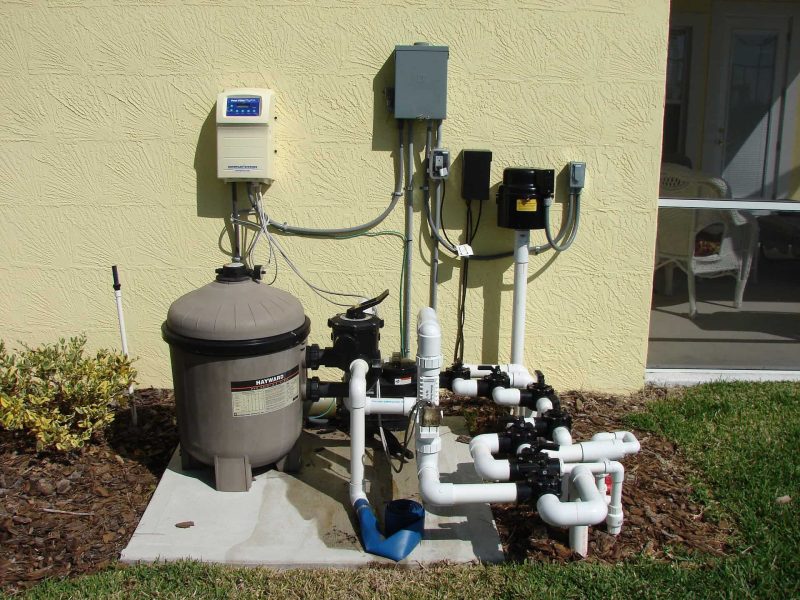
We shut off power at the breaker before the old pump comes out. The new pump gets plumbed in and mounted on a solid, level base, so it doesn’t vibrate against the pad. Most pool motors can run on either 115 or 230 volts, and the terminals have to be wired for the voltage your pad actually supplies. Wrong wiring or low voltage makes a motor run hot and die early.
If a heater sits on the pad, it needs a check valve between the filter and the heater. That keeps hot water from flowing back into the filter when the pump shuts off. Any exposed plastic pipe in full Texas sun should be coated to protect it from UV damage, so we check that too.
Priming and Startup
A self-priming pump still needs water in its strainer pot to get started. So we fill the pot, seal the lid and open the air relief valve on the filter before startup. Then we bring the pump up and watch it catch prime. Air in a new installation usually means a loose union, a fitting or a lid O-ring, and we chase those down before we leave. Once the water runs clear and the air is out, we note your clean filter pressure as the new baseline.
Speed Schedules and Automation
On a variable-speed pump, we program a starting schedule: low speed for daily filtering, plus higher speeds for the spa, water features or a cleaner. If you have a Pentair, Hayward or Jandy controller, we connect the new pump so it runs on the same schedule as the rest of the pad. Want to run the pump, heater and lights from your phone? That’s our automation service. Before we go, we show you how to change speeds and schedules yourself.
Taking Care of a New Pool Pump
A new pump lasts longer when the basics get done. Most of this takes a minute at the pad:
- Empty the skimmer and pump baskets often, especially in oak pollen season and fall leaf drop.
- Keep grass clippings, leaves and dust away from the motor’s cooling vents.
- Store chlorine, acid and DE powder away from the motor, never next to it.
- Use a motor cover only if air can still move through it.
- Don’t spray down the pad while the motor is running.
When the lid O-ring looks dry, a thin coat of silicone-based lubricant keeps it sealing. Skip petroleum jelly, since it isn’t made for that job. Also, take a photo of the motor nameplate now while it’s clean and easy to read. If you’re on our Full Service weekly plan, equipment inspections are part of every visit, so a new noise or a drip gets noticed early.
Why Homeowners Choose Southern Pool + Outdoors for Pool Pump Installation
We size pumps to the pool, not to the biggest model we can sell. You get a clear explanation of why one pump fits better than another, and an honest answer when repair beats replacement. We service and install pumps, filters, motors, automation systems and chlorinators, so we see how the whole pad works together.
Ready to retire a loud or thirsty pump? Call (214) 922-1914 or schedule pool pump installation online. You can also see all of our pool equipment installations.
Our Service Areas
- Allen
- Plano
- Dallas
- Mckinney
- Wylie
- Anna
- Fairview
- Prosper
- Lucas
- Celina
- Carlton
- Melissa
Pool Pump Installation Questions From North Texas Homeowners
Here are straight answers to the pool pump installation questions homeowners around North Texas ask most often.
It depends on the pump and the pad. A variable-speed pump costs more up front than a two-speed or single-speed model, and plumbing or electrical changes add to the job. Since a slow-running variable-speed pump uses far less power, it often pays you back over time. Call (214) 922-1914 for a quote on your setup.
Handy homeowners do, but it's more than swapping a box. The pump has to be sized to your plumbing and filter, plumbed without air leaks, and wired for the right voltage. Motor wiring and pump room re-piping belong with a trained, licensed pro. A mistake can mean a motor that overheats or a pump that never holds prime.
Neither one makes the water cleaner. What matters is matching the motor to the voltage at your equipment pad. Many pool motors can run on either 115 or 230 volts, but the terminals have to be wired for the supply you actually have. Wrong wiring or low voltage makes a motor run hot and fail early.
If the housing, strainer pot and impeller are in good shape, a new motor can be the smarter fix. It has to match the old motor's total horsepower and frame. Replace the whole pump when the wet end is cracked or brittle, or when you want the energy savings of a variable-speed pump.
For most North Texas pools, yes. Pumps here run long hours from spring through fall, and slow speeds save the most energy. Cutting pump speed in half lets a pump use about one-eighth the energy. You can still speed it up for the spa, a waterfall or a cleaner when you need more flow.
Size it to your system, not to the biggest pump you can afford. We look at pool volume, pipe size, filter rating, spa jets and water features. A variable-speed pump can run slow most of the time, but at full speed it still can't exceed what your filter, drain covers and plumbing are built to handle.
Maybe not. Spa jets need real flow and pressure, and a small variable-speed pump that's great for filtering may leave the jets weak. If your old pump handled the spa, the new one needs similar output at high speed. We check what the pump has to do for the spa before we recommend a size.
Longer and slower usually wins. One turnover filters only about 63% of the water, and it takes about four to filter all but 2%. Most pools do well running at low speed for many hours, with short bursts at higher speed for skimming or the spa. Summer heat and heavy pollen weeks call for more run time.
No. Horsepower doesn't tell you flow. Impeller design, pipe size, the filter and every elbow in the plumbing add resistance, called total dynamic head. Two pumps with the same horsepower can move very different amounts of water through the same system. That's why we size from the plumbing and the filter, not the label.
Yes. Filter pressure drops when the pump runs slower, because less water is moving through the filter. That's expected and not a sign of trouble. What matters is your clean baseline at each speed you use. Note the pressure right after you clean the filter, then watch for it to climb 8 to 10 psi above that.
Still have questions?