
Spa Repair in North Texas
Southern Pool + Outdoors handles spa repair across North Texas for spas built into or attached to swimming pools. We fix spas that won’t heat, have weak jets, lose water or won’t switch into spa mode. Call (214) 922-1914.

Spa stuck cold, jets weak or water draining into the pool? Get a free spa repair quote from Southern Pool + Outdoors.
Schedule Service!
Spa Repair for Spas Built Into Your Pool
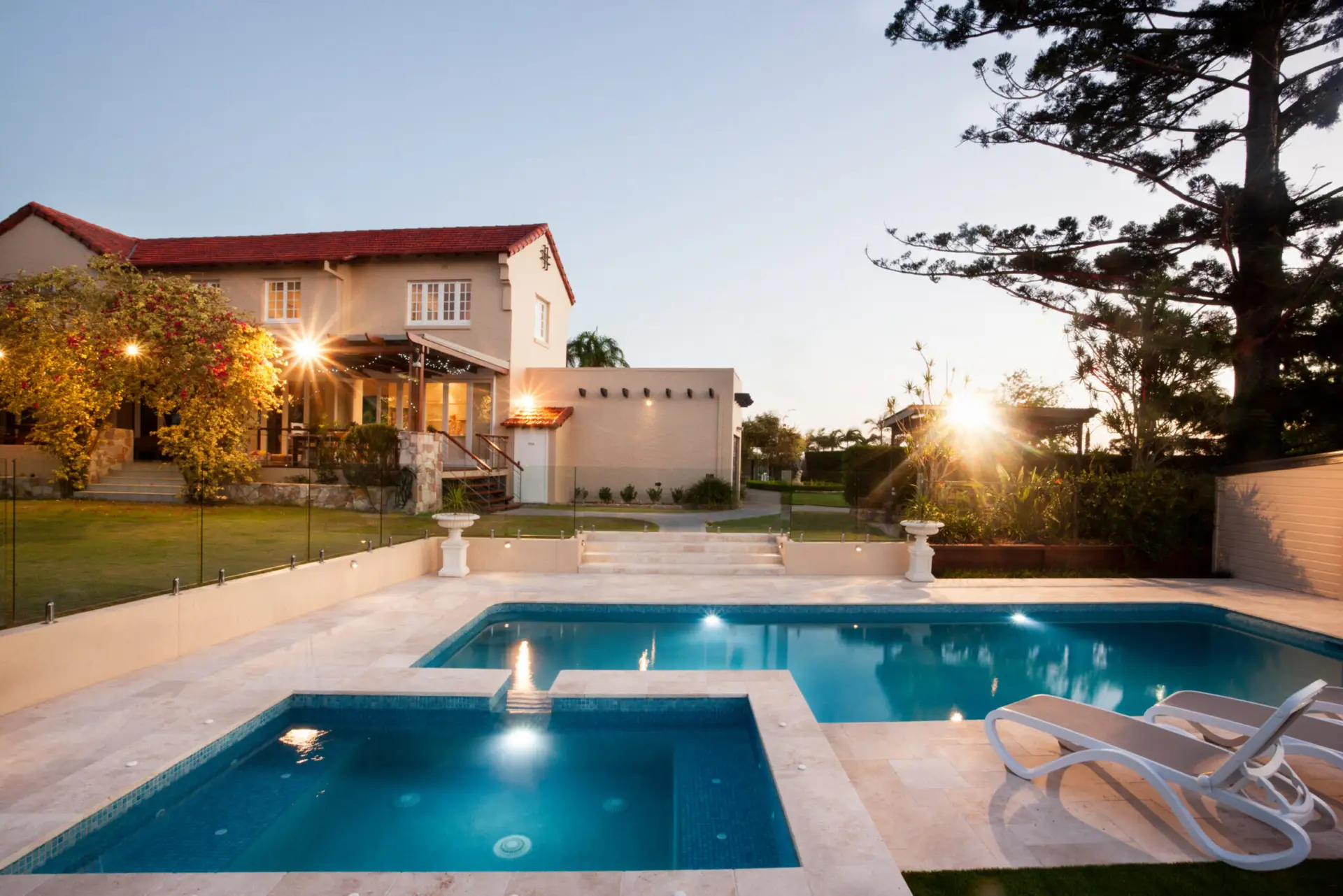
An attached spa shares almost everything with the pool next to it. The same pump pushes the water, the same filter cleans it and the same heater warms it. Valves, actuators and your automation decide where the water goes. So when the spa acts up, the problem often isn’t in the spa at all.
A heater issue keeps the spa from reaching temperature. If a valve actuator won’t turn, the system can’t switch into spa mode. A circulation problem shows up as weak jets. A bad check valve lets the spa drain into the pool every time the pump shuts off. Treating the symptom without tracing the cause usually means paying for the same repair twice.
North Texas is hard on spa equipment. Hot water drops calcium out of our hard fill water, and the scale lands inside the heater and on the jets. Oak pollen and fall leaves pack the small spa skimmer and the filter. A freeze like February 2021 can crack plumbing and valve bodies that sit above ground at the equipment pad.
Our spa repair service covers built-in spas that are part of a residential swimming pool, including raised spas, spillover spas and spas built into the pool structure. We trace the problem through the pump, filter, heater, valves, plumbing and controls, then explain the repair before we start. We do not repair portable hot tubs or standalone spas. If you have a spa attached to your pool and something doesn’t seem right, we’ll find out why.
We Are Experts With:




How an Attached Spa Shares the Pool's Equipment
Most attached spas run off one pump and one set of equipment. In pool mode, water pulls from the pool’s skimmer and main drain and returns to the pool. In spa mode, valves rotate so the pump pulls from the spa drain and pushes water back through the spa’s jets. Many systems send a little water to the spa in pool mode on purpose. That’s what keeps a spillover running.
Spa jets are different from pool returns. Each therapy jet uses a venturi that pulls in air and mixes it with fast-moving water. Some spas add an air blower for extra bubbles. All of it depends on the valves pointing the right way, the pump moving enough water and the filter staying clean. When one part slips, the whole spa feels it.
Spa Not Heating or Heating Slowly
A cold spa is the most common call we get on attached spas. The heater gets blamed first, but it’s often innocent.
Valves Not Isolating the Spa
For the spa to heat quickly, the heated water has to stay in the spa. If the suction or return valve is partly open to the pool, the heater ends up warming the whole pool instead. On manual systems, that’s usually a valve handle set wrong. On automated systems, it’s often an actuator that didn’t turn all the way, or a setting that keeps a return open. We check the valve positions in spa mode before we touch the heater. You can run a quick test yourself: switch to spa mode and watch the pool returns. If water still pushes out of them, the valves aren’t fully isolating the spa.
Heater and Flow Problems
Valves set right and still no heat? Then look at the heater and the flow feeding it. A dirty filter or a pump running too slow can trip the heater’s pressure switch, and the heater will refuse to fire. Scale inside the heat exchanger slows heating too. If the heater itself has failed, our pool heater repair team handles the diagnosis and the fix.
How Long Should an Attached Spa Take to Heat?
You can work out a rough number yourself. Heating water takes about 8.33 BTUs per gallon for every degree of rise. A 500 gallon spa raised 30 degrees needs roughly 125,000 BTUs. A large gas heater can do that quickly, while a heat pump or a small electric heater takes much longer. Electric heaters in particular cost a lot to run and recover slowly. If your spa took an hour to heat last winter and takes three hours now, something changed. That’s worth a service call.
A cover helps more than most people think. Most of the heat a spa loses leaves through the surface, so a covered spa heats faster and holds temperature longer.
Weak Spa Jets and Air Problems
Weak jets almost always come down to water flow or air. Check the simple things first: the filter, the skimmer basket and the pump basket.
Jets and Pump Speed
A clogged filter or a full pump basket starves the jets. A valve that leaves part of the flow going to the pool weakens them too. On variable-speed pumps, a spa speed set too low is a common cause, and it’s an easy fix. Some jets strong and others weak? Look for clogged or wrong-size nozzles, a jet that’s been turned down or a blocked air intake. If the pump itself is failing, we’ll walk you through pool pump repair options.
Air Blowers and Bubbles
An air blower is an air pump with a motor. It has to be sized to the spa’s air lines and jets. Water must never reach the blower motor, so the air line uses a check valve or a Hartford loop, a pipe loop that rises above the rest of the plumbing. When a blower runs hot and shuts off, it may be pushing against too much back pressure from clogged jets or poor plumbing. Blowers also need ground fault protection, and we check for it.
Filter Problems Show Up in the Spa First
Spa water works much harder than pool water. A spa often has only about 200 gallons per person sitting in it, compared to roughly 1,800 gallons per person in a pool. Six people in a 1,200 gallon spa put the same load on the water as 275 people in a 55,000 gallon pool. All that sweat, lotion and body oil goes straight to the filter.
Oils coat cartridge pleats and glue sand into clumps, so a filter that keeps up fine in pool mode can choke during a busy spa night. Low flow then weakens the jets and trips the heater’s pressure switch, and the spa looks broken when it’s really just dirty. So filter pressure is one of the first things we check on a spa call. Sometimes a deep filter clean fixes the problem before any parts get ordered.
Spa Losing Water or Draining Into the Pool
A raised or spillover spa that drops to pool level when the pump shuts off usually has a check valve problem. The check valve in the spa return line is supposed to stop water from flowing backward. When its flapper wears out or sticks open, gravity drains the spa into the pool. To confirm it, we close the spa return and watch whether the spa holds its level. Then we replace the valve or its internal parts.
If the spa loses water even with the pump running, the leak may be at the equipment pad or in the plumbing. We inspect visible plumbing, valves and fittings for leaks. If the problem looks like an underground line or a leak in the spa shell, additional leak detection may be the next step.
Spa Mode and Valve Actuators
Valve actuators are the motors that turn your pool and spa valves when you switch modes. When the spa won’t go into spa mode, the actuator is a common suspect. Some actuators have a manual switch on the side, and if it’s left in the middle position the actuator won’t move at all. Others fail inside, where small switches wear out over time.
We also check the automation behind the actuators. A spa that doesn’t respond to the control panel or the phone app can have a programming or wiring problem, not a bad valve. Our automation page covers the control systems themselves. If spa lighting is part of the problem, pool light repair is handled separately.
Freeze Damage on Spa Equipment
North Texas doesn’t freeze often, but a hard freeze like February 2021 hits spa equipment first. The pump, filter, heater and valves all sit above ground at the equipment pad with water standing in them. Raised spas also have more exposed plumbing than the pool.
Freeze damage often hides until the weather warms up. A heat exchanger that froze may not leak until spring start-up, and a cracked valve body may only weep while the pump runs. After any hard freeze, we look over the spa side of the system closely before calling the job done.
Spa Water Chemistry That Damages Equipment
Hot water changes the chemistry rules. Jets and blowers bubble carbon dioxide out of the water, which pushes pH up and alkalinity down. Calcium is less soluble in hot water, so scale forms inside the heater first, where the water is hottest. That scale chokes flow and wastes energy. Swing the other way into low pH or low alkalinity, and the water attacks copper heater parts and metal fittings.
Small water volume makes dosing tricky too. A spa holds a few hundred gallons, so a splash of muriatic acid that barely moves the pool can crash the spa’s pH. Dry acid is gentler for small adjustments. On a spillover spa, the water mixes with the pool constantly, so we balance the two together.
Dissolved solids build up faster in a spa, too. As they climb, the water gets more aggressive toward the heater, and dissimilar metals in the system can corrode. Keeping spa water balanced is a big part of keeping spa equipment alive. Regular spa cleaning keeps the water in range so the repairs don’t keep coming back.
Safety Checks During Every Spa Repair
Spas carry a few risks pools don’t. Hair entanglement at the drain happens most often in spas, because the water is so shallow. That’s why spas need dual drains and anti-entrapment drain covers that meet the Virginia Graeme Baker Pool & Spa Safety Act. A cracked, loose or missing drain cover is a stop-everything problem. We check every cover while we’re working on the spa.
Temperature control matters too. The CDC advises that hot tub water should never be hotter than 104°F. If your spa overshoots its set point, the heater controls or sensor need attention right away. Everyone using the spa should also know where the pump’s cut-off switch is, so it can be shut off fast in an emergency.
Why Homeowners Choose Southern Pool + Outdoors for Spa Repair
We work on the whole system, not just the part that looks broken. Attached spas share equipment with the pool, so we check the valves, pump, filter, heater, plumbing and controls together. That keeps you from paying for a part that was never the problem. When repair makes sense, we repair. When something is worn out, we explain why and lay out your options. Spa trouble is just one of the pool repairs we handle on the same equipment pad.
If your spa won’t heat, has weak jets or keeps losing water, call (214) 922-1914 or schedule spa repair online.
Our Service Areas
- Allen
- Plano
- Dallas
- Mckinney
- Wylie
- Anna
- Fairview
- Prosper
- Lucas
- Celina
- Carlton
- Melissa
Spa Repair Questions From North Texas Homeowners
Here are straight answers to the spa repair questions homeowners around North Texas ask most often.
It depends on what failed. A valve setting or a dirty filter costs little to fix, while a heater or pump repair costs more. Attached spas share equipment with the pool, so we trace the real cause before quoting anything. That keeps you from paying for parts you don't need. Call (214) 922-1914 for a diagnosis and quote.
For a spa built into your pool, almost always. The spa is part of the pool structure and runs on the same pump, filter, heater and valves, so repairing those parts fixes both. The question is usually repair or replace for one piece of equipment, like an old heater, and we'll walk you through that choice honestly.
For a spa attached to your pool, call a pool service company that works on pool equipment, since the spa runs on the pool's pump, heater and valves. That's the work Southern Pool + Outdoors does across North Texas. We don't repair portable hot tubs or standalone spas, so those owners need a hot tub specialist.
Compare the pool and the spa. If the pool heats fine but the spa won't, the valves are the likely problem, not the heater. If neither one heats, look at the heater and the flow feeding it. Error codes, clicking without ignition and a heater that cycles on and off all point to the heater system.
For attached spas, the rule we work to covers heater placement. A pool heater should sit at least five feet from the inside wall of the spa unless a fence, wall or other permanent barrier separates them. Local codes may add their own distance rules, so we check those on every heater placement.
Usually a bad check valve in the spa return line. A Los Angeles owner on TroubleFreePool confirmed it by closing the spa return overnight, and the spa held its level. When the check valve's flapper wears out, gravity pulls the raised spa down to pool level. Replacing the flapper or the valve usually fixes it.
Isolate it from the pool. A TroubleFreePool thread on this explains the order: open the spa suction, close the pool suction valves, then open the spa returns and close the pool returns. Then turn on the heater. Use a spa cover, since most heat escapes through the surface. Automated systems do these valve moves for you in spa mode.
Check the valves first. A TroubleFreePool owner with a 266,000 BTU propane heater saw his spa take six hours to rise 16 degrees, which is far too slow for that heater. Partly open pool valves, low flow, scale in the heat exchanger and low gas supply are the usual causes. A spa should not take hours with a properly sized gas heater.
Flow and air are usually the problem. An Austin owner on TroubleFreePool had three strong jets out of six and a blower that overheated in spa mode. Replies pointed to clogged or undersized jet nozzles creating back pressure and a pump speed set too low. Clean the nozzles, check the filter and test different pump speeds.
Check the switch on the actuator first. A Houston owner on TroubleFreePool found his actuator's manual switch sitting in the middle off position, which stops the valve from moving. If the switch is set right and the valve still won't turn, a worn internal switch or a programming issue in the automation is the likely cause.
Still have questions?