How long to run pool pump equipment comes down to one number: the hours it takes to push every gallon in your pool through the filter once. Divide your pool’s gallons by the pump’s gallons per minute, then divide by 60. In a DFW summer, plan on about two of those turnovers a day. In winter one is plenty, and on a freeze night the pump runs until the cold breaks.
That’s the short answer. Below is the math, plus how to adjust it for triple-digit summers in the Metroplex and for the kind of pump you own.
Start With Your Pool Turnover Rate
Turnover is the time your pump needs to move a full pool’s worth of water through the filter. Pros call it your pool turnover rate. You need two numbers to find it: how many gallons you have and how fast the pump moves them.
Work Out Your Pool's Gallons
For a rectangle, multiply length by width by average depth. Then multiply by 7.5, since a cubic foot holds about 7.5 gallons. Take a 15 by 40 foot pool that runs from 3.5 feet to 5.5 feet deep. The average depth is 4.5 feet, so 15 x 40 x 4.5 x 7.5 comes to about 20,000 gallons. For a freeform pool, check your build paperwork.
Find Your Pump's Flow Rate
Flow is measured in gallons per minute, or GPM. A flow meter on the return line gives the real number, but most backyard pads don’t have one. Some variable speed pumps show an estimated GPM on the keypad. Don’t trust the number on the box, though. Every pipe, elbow, filter and heater adds resistance, so real flow is lower than the rating. A dirty filter or a full basket drops it even more.
Now do the math. At 40 GPM, 20,000 gallons takes 500 minutes, or about 8.3 hours for one turnover. A smaller 10,000-gallon pool at 30 GPM turns over in about 5.6 hours.
Why One Turnover Isn't Enough
Filtered water mixes right back in with dirty water, so a turnover doesn’t clean the pool in one neat pass. One turnover filters only about 63% of the water. A second gets you to about 86%, and a third to about 95%. It takes four turnovers to filter all but 2%. That’s why commercial pools are built around a six-hour turnover. A backyard pool doesn’t need that, but it explains why one turnover a day falls behind in July.
Cut the flow in half and the same turnover takes twice as long, so a pump on low speed needs a longer schedule.
Source: industry operating guidelines (gallons ÷ GPM ÷ 60 = hours per turnover).
| Flow rate | Hours for one turnover |
|---|---|
| 20 GPM | 16.7 |
| 30 GPM | 11.1 |
| 40 GPM | 8.3 |
| 50 GPM | 6.7 |
| 60 GPM | 5.6 |
| 80 GPM | 4.2 |
At 60 GPM, a single speed pump turns that pool over in under six hours. A variable speed pump loafing at 20 GPM needs almost 17, and both are fine on the right schedule.
How Long to Run Pool Pump in Summer Across DFW
From June into September, our pools work the hardest. Warm water helps algae grow, and the sun burns off chlorine. Without stabilizer in the water, sunlight can destroy half the chlorine in less than an hour. Add a pool full of swimmers and a south wind blowing in bugs and grass clippings.
So in summer we aim for about two turnovers a day. For the 20,000-gallon pool at 40 GPM, that’s around 16 to 17 hours. On a single speed pump that’s a lot of electricity, which is the best case for a variable speed pump here. Running longer than you need won’t hurt the water. It just costs power and puts hours on the motor.
Spring brings oak pollen and cottonwood fluff in April and May, then hail and storm debris, so give the skimmer extra time. Rain knocks chlorine down fast, too. After a big storm, run the pump longer and test the water the same day.
Run It in the Daytime, Coast Overnight
If you can only run so many hours, put most of them in the daytime. That’s when the sun is burning off chlorine and people are in the water. Salt pools need daytime hours most, since the cell only makes chlorine while the pump runs. Overnight is the time to drop a variable speed pump to its lowest speed and let it coast. Running slow at night while nobody swims is one of the easiest energy savings there is.
How Long to Run Pool Pump in Winter
Once the water cools down, chlorine demand falls off and algae slows. From about December through February, one turnover a day is usually enough. For our 20,000-gallon example at 40 GPM, that’s a little over 8 hours. Still test at least once a week, because demand drops but never stops. If you’d rather hand that off, our weekly pool service leaves a digital report after every visit with your chemical readings and notes.
North Texas winters are mild enough to keep the pool open and circulating. Cedar elm leaves come down in the fall and live oaks shed in the spring, so keep emptying the skimmer basket. Just plan ahead for the few nights that freeze.
Pool Pump Freeze Protection When a Norther Blows Through
Moving water is far harder to freeze than water sitting still in a pump or a pipe. That’s the whole idea behind pool pump freeze protection. Hayward says all pumps should run while temperatures are below freezing, around the clock, until it warms back up.
Most automation systems have a freeze setting, and some variable speed pumps have one built in. It turns the pump on when the air sensor drops to a set temperature. Check that it’s turned on before the first cold front, not after. Speed matters less than coverage. If you have a spa or a waterfall, make sure water is moving through those lines too. A line with no flow can still freeze and crack. Heaters hide freeze damage well, too. A heat exchanger that froze may not leak until you fire it up in spring.
If the Power Goes Out
Freeze protection needs power. When the grid went down across the Metroplex in February 2021, freeze protection went down with it. If you lose power in a hard freeze, drain what holds water:
- Turn off the breakers to the pool equipment, even with the power already out.
- Open the filter’s air relief and pull its drain plug.
- Open the salt cell and any inline chlorinator so they drain.
- Take the lids off the check valves so they don’t crack.
If ice has already formed, wait for it to melt before you turn the power back on. And if your pad sits lower than the pool, close the valves first, or water will keep pouring out of the lines. Never use car antifreeze in pool plumbing either, because it’s toxic.
How a Variable Speed Pool Pump Changes the Math
The turnover math stays the same with every pump. What changes is how much power each turnover costs you.
Single Speed Pumps
A single speed pump runs flat out every minute it’s on. Turnovers come quickly, but every hour runs at full power. ENERGY STAR says a pool pump could be your home’s second largest energy user, at as much as $310 a year. Pushing water faster also costs more than you’d think. In the same pipe, doubling the flow raises friction loss about four times.
Two Speed Pumps
A two speed pump has a high speed for the cleaner or spa and a low speed for daily filtering. Low is typically half of high. It’s a solid step up, but you only get two choices.
Variable Speed Pumps
A variable speed pool pump lets you pick the exact speed for each job, and this is where the savings live. ENERGY STAR notes that cutting pump speed in half lets the pump use just one-eighth as much energy. At half speed you move roughly half the water, so a turnover takes twice as long. Twice the hours at one-eighth the power works out to about a quarter of the energy for the same turnover.
ENERGY STAR also points out that filtering needs only half the flow of running a pool cleaner. So the smart schedule is low speed most of the day, plus a short high-speed block for the cleaner or spa. Some DFW owners just run a variable speed pump at low speed around the clock. That works, as long as the speed is high enough for the equipment below. Still running a single speed pump 16 hours a day in a Frisco July? That’s the first upgrade we’d suggest.
Equipment That Sets Your Minimum Speed
Low speed saves power, but a few pieces of equipment need enough flow to do their job.
Salt Cells
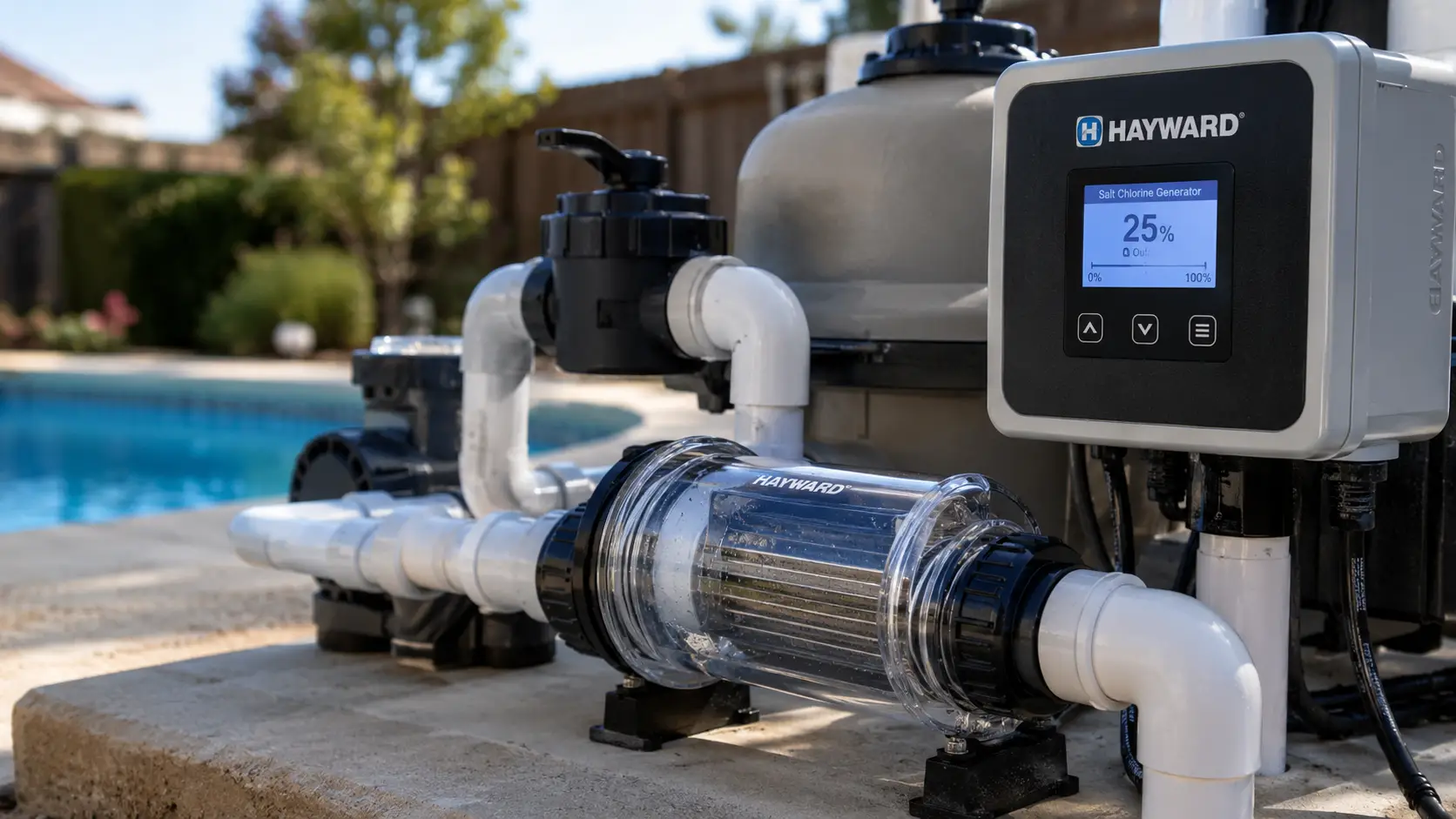
A salt chlorine generator only makes chlorine while water flows through the cell. It’s wired to shut down when the pump is off, and a flow switch keeps it off when flow is too low. That means run time on a salt pool is chlorine-making time. If the cell can’t keep up in July, add pump hours or raise the output. Pump speed doesn’t matter to the cell, as long as the flow switch stays closed. Our salt systems page covers output settings in more detail.
Heaters
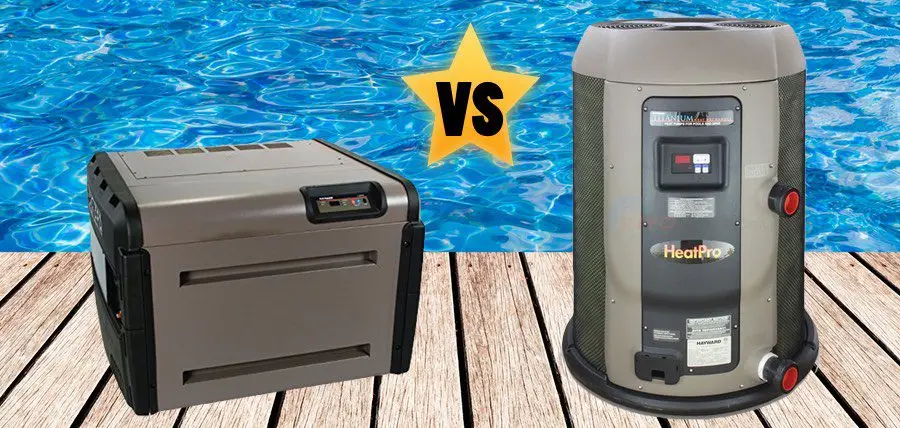
Gas heaters and heat pumps need flow too. A pressure or flow switch keeps the heater from firing until enough water is moving. If a heater cycles on and off before it reaches temperature, look for low flow from a dirty filter or a closed valve. When the pump runs on a timer, the heater should have its own switch, often called a fireman switch. It shuts the burner off before the pump stops, so the heater cools down while water still moves through it. If it still won’t fire with good flow, that’s a pool heater repair call.
DE Filters
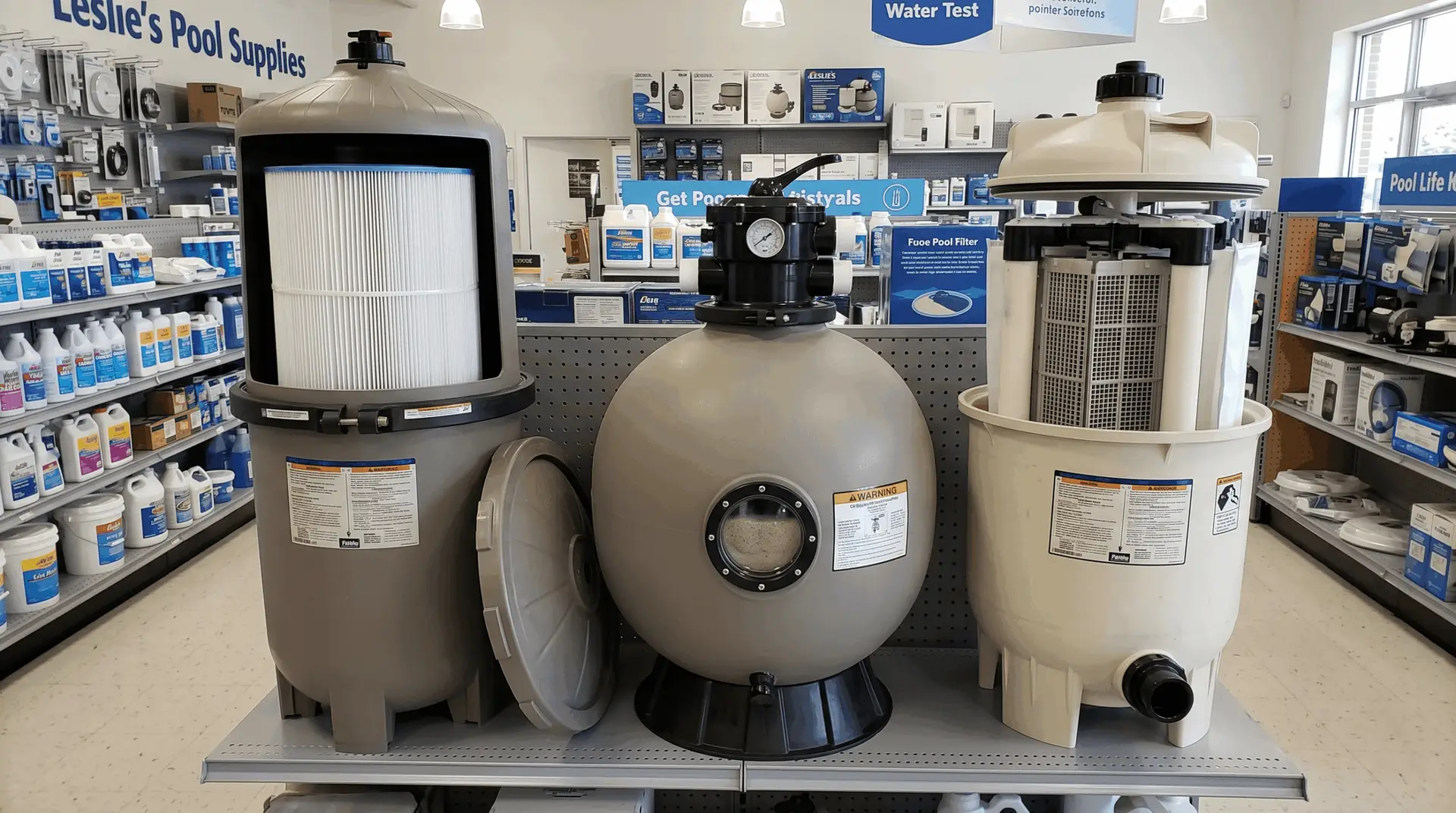
Running a DE filter at very low speed? Keep an eye on it. The flow is what holds the DE powder on the grids, and too little flow can let it slide off. If you’re not sure which filter you have, our guide to sand vs cartridge vs DE pool filters explains the difference.
Get More Out of Every Hour the Pump Runs
Run time only helps if the water goes where it should:
- Empty the skimmer and pump baskets. Debris cuts flow, and a starved pump can cavitate, which sounds like gravel in the pump and damages it.
- Keep the water level near the middle of the skimmer opening. Too high or too low, and the skimmer stops skimming.
- Aim the return fittings. Most wall returns are eyeballs you can turn, so point them to roll the water around the pool in one direction toward the skimmer.
- Brush the walls weekly so the circulation can carry loosened dirt and film to the filter.
Dead spots with poor circulation are where algae gets started, often in deep corners. Our summer south wind also piles leaves and bugs against the north wall, so let the returns push that surface toward the skimmer. If the water’s hazy even with good run times, our guide to why your pool is cloudy covers the chemistry side.
When the Pump Itself Is the Problem
Some run-time problems are really pump problems. A pump that hums but won’t start, grinds like gravel, leaks at the seal or loses prime every afternoon needs more than a new schedule. That’s a job for our pool pump repair team.
If an old single speed pump still runs long July days, switching to variable speed is the biggest savings in this guide. Our pool pump installation service sizes the new pump to your plumbing and filter. Bigger isn’t better here. Too much pump can push water faster than your drain covers and plumbing are rated for. With pool automation, you can run the pump, heating, lighting and water features from your phone. And if your pump is getting up in years, our guide to how long pool equipment lasts helps with the repair-or-replace call.
Call (214) 922-1914 or schedule service online. We work on pumps across Allen, Plano, Frisco, McKinney and nearby towns, Monday through Friday, 8 AM to 5 PM.
Pool Pump Run Time Questions From North Texas Pool Owners
Quick answers for pool owners around DFW, using the turnover math above.
How many hours a day should a pool pump run in summer?
In a North Texas summer, run it long enough for about two turnovers a day. For a 20,000-gallon pool moving 40 GPM, that's around 16 to 17 hours. A faster single speed pump needs fewer hours, and a variable speed pump on low needs more. To find your number, divide gallons by GPM, divide by 60, then double it.
How long should a pool pump run for a 10,000 gallon pool?
It depends on your flow rate. At 30 GPM, one turnover of 10,000 gallons takes about 5.6 hours. In a DFW summer, aim for two turnovers, so roughly 11 hours. In winter, one turnover a day is usually enough.
Is it better to run your pool pump overnight or during the day?
Run most of your filtering hours during the day. That's when the sun burns off chlorine and people are swimming, and a salt cell only makes chlorine while the pump runs. Overnight is the time to drop a variable speed pump to low speed and let it coast.
What happens if you run your pool pump too long?
Nothing bad happens to the water. Extra hours just cost electricity and put more time on the motor. So the goal is enough turnovers for the season, not the most hours possible.
Is it worth getting a variable speed pool pump?
For most North Texas pools, yes, because our summers call for long run times. ENERGY STAR says cutting pump speed in half lets a pump use just one-eighth as much energy. Since half speed moves about half the water, a turnover at half speed uses about a quarter of the energy. That adds up over a long DFW summer.
Can I just run my variable speed pump all day at low speed?
Yes, and some DFW owners do exactly that. It works as long as the speed keeps your salt cell and heater flow switches closed. If you have a DE filter, make sure it still holds its powder at that speed.
Should I run the same pump hours in winter as in summer?
No. Once the water cools, one turnover a day is usually enough, which is about half the summer schedule. Keep testing the water weekly, and leave freeze protection turned on for cold nights.
What pump speed should I run during a freeze?
Speed matters less than coverage. Keep the pump running around the clock while temperatures are below freezing, and make sure water moves through every line, including the spa and waterfall lines. A freeze setting on your automation or pump can handle this if it's turned on.
What should I do with my pool equipment if the power goes out in a freeze?
Drain what holds water. Turn off the equipment breakers, open the filter's air relief and pull its drain plug, open the salt cell and inline chlorinator, and lift the check valve lids. If ice has formed, wait for it to melt before restoring power. If your pad sits below the pool, close the valves first.
Do I need to run my pump longer with a salt water pool?
Your run time has to cover the chlorine the cell needs to make, because it only makes chlorine while water flows through it. If chlorine runs low in July, add pump hours or raise the cell's output. Pump speed doesn't matter to the cell, as long as the flow switch stays closed.