This pool maintenance checklist is the routine we would hand any new pool owner in Allen or Frisco. It covers what to do every few days, every week, every month and each season. A North Texas pool isn’t hard to keep, but it punishes skipped weeks, especially in July.
Most of the work takes minutes. Pool people sum the whole job up as the three C’s: circulation, cleaning and chemistry. The parts that need judgment, like water balance and freeze prep, get their own sections below.
How Often Should You Clean Your Pool in North Texas?
Clean and test a North Texas pool at least once a week, all year. In summer, the light jobs move up to about three times a week, because heat and sun push the water out of range fast. Winter slows things down, but leaves still blow in and freezes bring their own work.
We don’t recommend stretching to every other week. That gap usually costs more in chemicals than it saves, and in July one missed week can turn the water green.
The Pool Maintenance Schedule at a Glance
Read each bar as times per month, so 12 means about three times a week.
Summer triples the skimming and chlorine testing, while brushing and the monthly tests hold steady all year.
Source: Southern Pool + Outdoors checklist, based on industry operating guidelines.
| Task | Summer (times per month) | Winter (times per month) |
|---|---|---|
| Skim, empty baskets | 12 | 4 |
| Test chlorine and pH | 12 | 4 |
| Brush walls and tile | 4 | 4 |
| Vacuum the floor | 4 | 2 |
| Test alkalinity | 4 | 4 |
| Test CYA and calcium | 1 | 1 |
Every Few Days: Skim and Empty the Baskets
From June through September, skim the surface and empty the skimmer basket three times a week. During heavy pollen or leaf drop, do it daily. Whatever floats long enough sinks, and then it feeds algae until you vacuum it up.
Check the pump basket on the same trips. A packed basket chokes flow, so shut the pump off, empty it and look at the lid O-ring for cracks.
Watch the water level too. It should sit around the middle of the skimmer opening. Too high, and the skimmer stops pulling debris off the top. Too low, and the pump can suck air and lose its prime. In winter, once a week covers both jobs.
Your Weekly Pool Maintenance Checklist
Once a week, run the full routine: test, balance, brush and vacuum. Brushing kicks dirt into the water, so test first and vacuum last.
How Often to Test Pool Water and What to Aim For
In summer, test chlorine and pH at least three times a week. In winter, once a week is enough, and alkalinity gets a weekly test all year. Use your own drop-based kit that reads free and combined chlorine. Strips are fine for a quick look, but a monthly pool store test can’t keep up with a July pool. These are the weekly targets:
- Free chlorine between 2 and 4 ppm
- pH between 7.4 and 7.6, with 7.2 to 7.8 still acceptable
- Total alkalinity between 80 and 120 ppm, toward the low end if you use liquid chlorine
- Combined chlorine at 0.2 ppm or less
The CDC’s home pool water testing guidance calls for at least 2 ppm of chlorine in any pool that uses stabilizer. It goes further on testing too, and suggests checking twice a day. Few families manage that. Texas sun burns through chlorine fast, though, and a July pool can run out between weekly tests.
Muriatic acid brings pH and alkalinity down, and baking soda raises alkalinity. Always add acid to water, never water to acid. Pour it slowly in front of a return line with the pump running.
Test alkalinity again after every heavy storm, because hard rain can drop it fast and let pH bounce. If the water still goes hazy with good numbers, see why a pool turns cloudy.
Brush the Walls and Tile Line
Most DIY owners skip brushing. If we could keep only one weekly job, it would be this one. Bacteria build a slime layer called biofilm on walls and in corners. Bacteria inside that layer can take 100 times more disinfectant to kill, so chlorine alone won’t clear it. A brush breaks the layer up and pushes it into the water. After that, chlorine and the filter can finish the job.
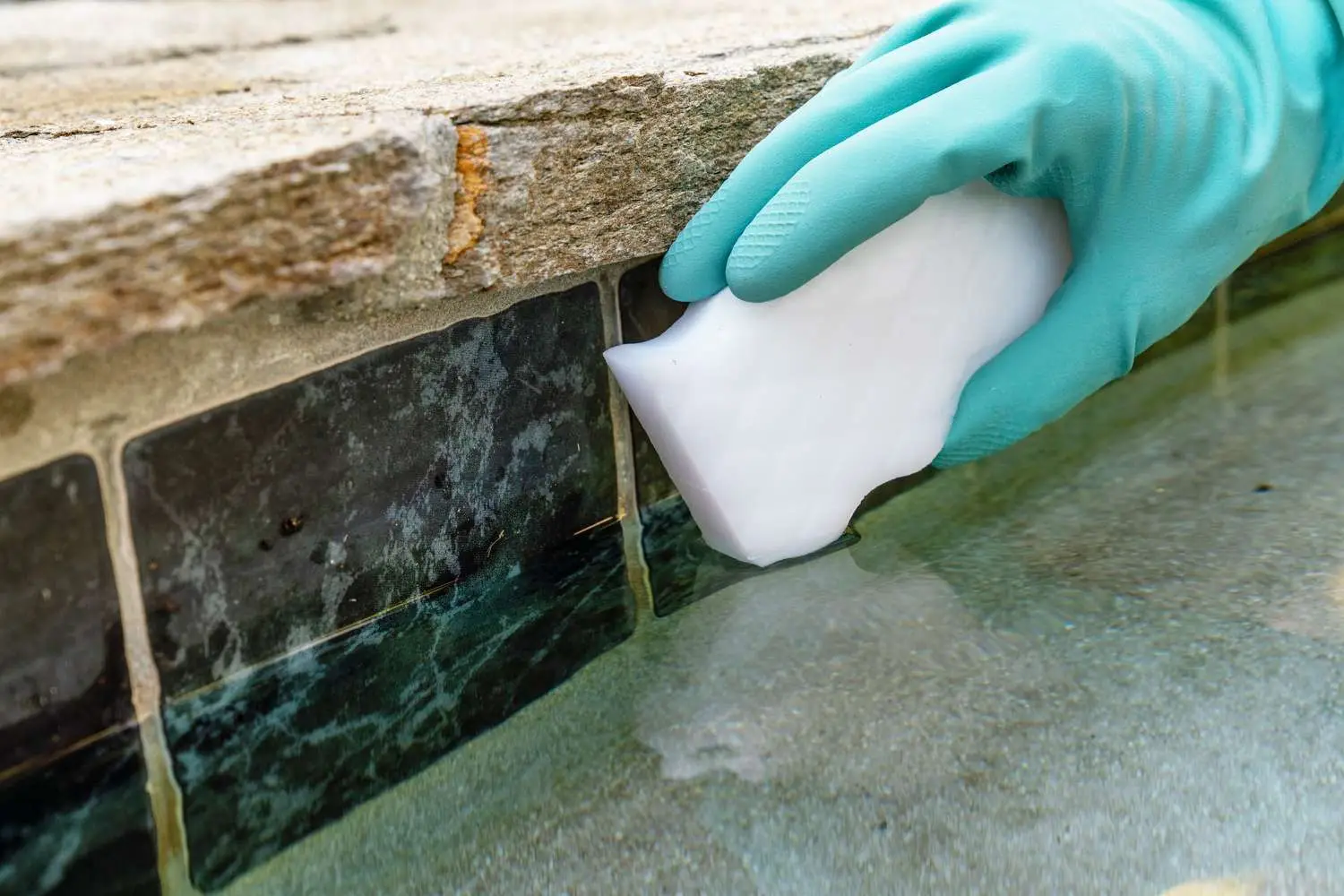
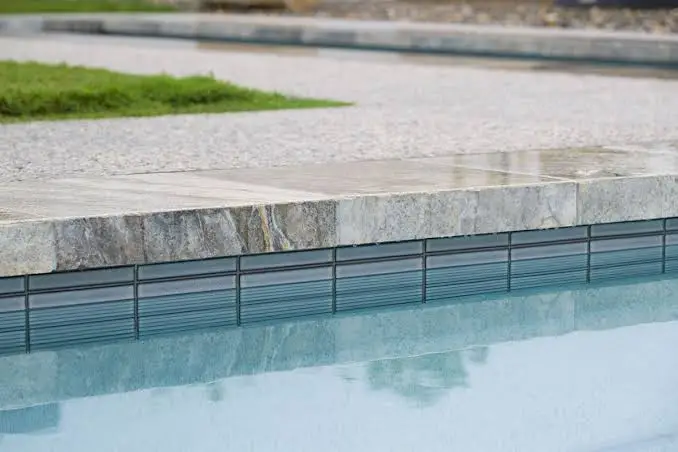
Brush the waterline tile too, since sunscreen and body oil collect there and start a scum line. Use a nylon brush for weekly work. Save a stainless steel brush for algae on plaster, because regular use can damage the surface.
Vacuum After the Debris Settles
Vacuum once a week, after the dirt has had time to settle. Give it at least two hours after anyone swims, so the morning after a pool party works well. Debris left on the floor looks bad, and it also feeds algae. In winter, every other week is usually enough unless leaves keep coming in.
A robot cleaner handles most of this job. It won’t test the water or brush the steps, though.
How Often Should You Shock Your Pool?
Most pools don’t need a shock every week. Shock when combined chlorine reads above 0.2 ppm or after a heavy swim weekend. To clear it, raise free chlorine to about ten times the combined chlorine reading. Otherwise, steady chlorine in the 2 to 4 ppm range does the work.
The Monthly Pool Maintenance Checklist
These numbers drift more slowly, so once a month covers most pools.
Read the Filter Pressure Gauge
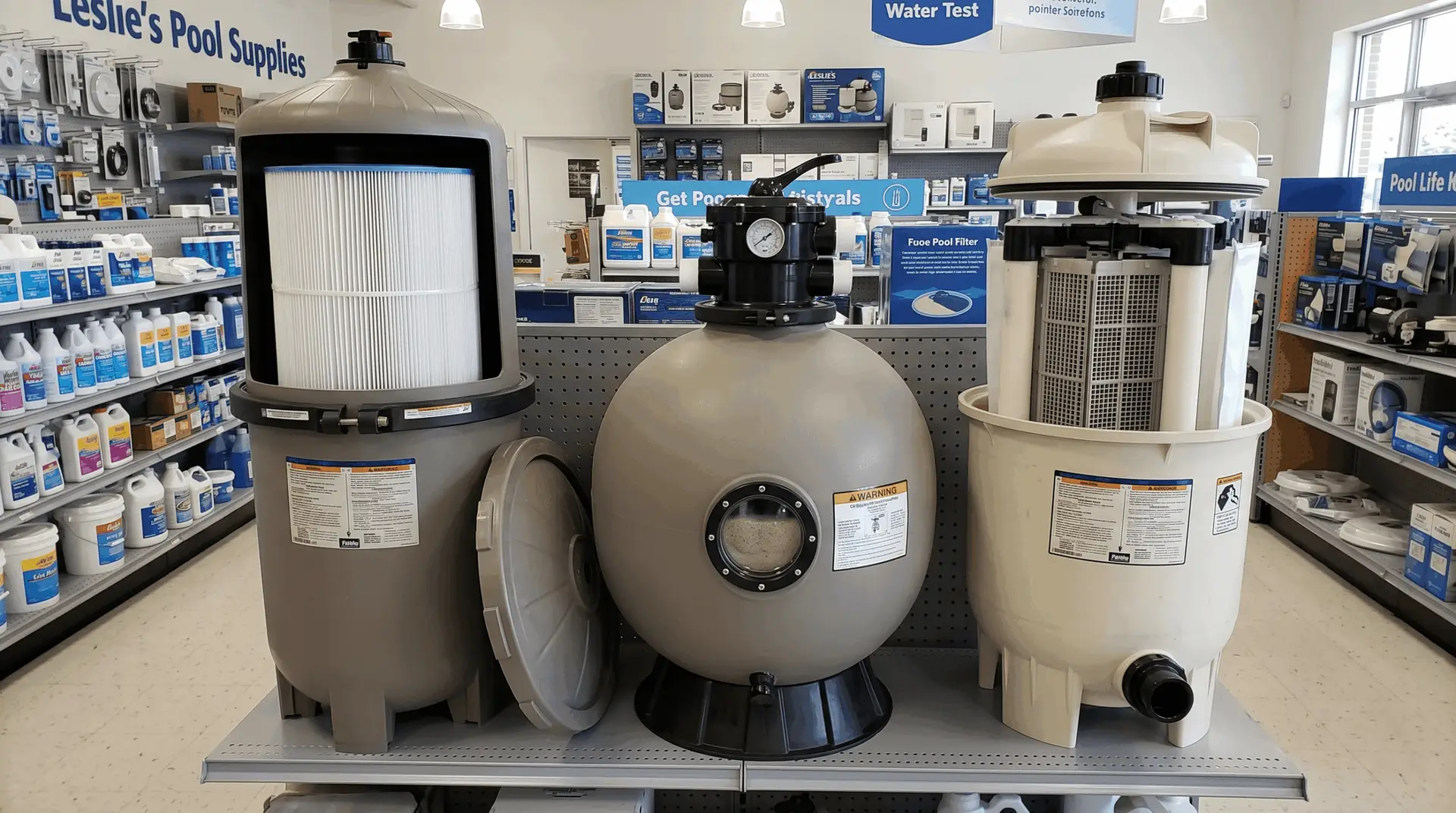
Write down the gauge reading right after you clean the filter. That number is your baseline. Sand and DE filters need a backwash once the gauge climbs 8 to 10 psi above it. A cartridge needs cleaning at about 10 psi over. Let the gauge set the schedule, and glance at it every week when you empty the pump basket.
Spring pollen loads a filter faster, so check it more often in March and April. If you’d rather hand that job off, our filter cleaning service handles every filter type. For the differences in media, see how each filter type compares.
Test Stabilizer and Calcium
Stabilizer, also called CYA or cyanuric acid, works like sunscreen for chlorine. Without it, the sun can burn off half your free chlorine in less than an hour. With CYA between 30 and 50 ppm, chlorine lasts three to ten times longer.
Test CYA monthly, or weekly if you use trichlor pucks, since every puck adds stabilizer that doesn’t burn off the way chlorine does. Too much CYA raises the risk of algae, and the only practical fix is a partial drain and refill. Salt pools need stabilizer too, and our salt water pool vs chlorine post covers the rest of that choice.
Calcium hardness belongs between 200 and 400 ppm. North Texas fill water runs hard, and evaporation leaves calcium behind with every top-off. A monthly test shows the climb before it turns into scale.
Run the Saturation Index
The saturation index, often called the LSI, rolls pH, alkalinity, calcium, water temperature and dissolved solids into one number. Anything from -0.3 to +0.3 counts as balanced. Above that range, water leaves scale on tile and in the heater. Below it, water etches plaster and corrodes metal.
Temperature is the part most owners forget. Warm water holds less calcium, so numbers that balance in March can scale in August. Plug your readings into a free LSI calculator once a month. Then run it again in June when the water warms up, and again in October when it cools.
Walk the Equipment Pad and Deck
Once a month, walk the equipment pad with the pump running. Look for drips at the valves and water under the pump, and listen for rattles or squeals. Then walk the deck. Blackland Prairie clay swells after rain and shrinks in drought, so check the joint between the deck and the coping for new gaps.
A Seasonal Pool Maintenance Checklist for North Texas
The weekly routine stays the same all year. What changes is the load the pool has to handle.
Spring: Pollen and Storms
From March into May, oak pollen lays a yellow film on the water, and cottonwood fluff follows it into the skimmer. Empty the baskets daily on the worst days. Plan on a filter cleaning once pollen season ends.
Spring storms and hail dump leaves and rainwater into the pool. After a hard rain, test alkalinity and pH, and expect to add chlorine. Lawn fertilizer and bird droppings both carry phosphates, which feed algae. That is one more reason to keep chlorine in range every week.
Summer: Triple-Digit Heat and Evaporation
The schedule tightens from June through September. Triple-digit afternoons burn chlorine fast, so test it three times a week and keep the chlorine feed full.
Evaporation picks up too. Heat, wind, low humidity and warm water all speed it up, and a hot south wind in August stacks most of them at once. Losing 1/4 inch or more a day is not unusual. Tape a ruler to the tile, and if the drop runs well past that, do a bucket test for a leak.
A cover helps. The U.S. Department of Energy says pool covers cut make-up water by 30% to 50% and chemical use by 35% to 60%. Pump run time matters most in July, and how long to run your pool pump covers the summer settings.
Fall: Live Oak and Cedar Elm Leaves
October and November bring leaf drop from live oaks and cedar elms. When a norther blows through, it can put a yard’s worth of leaves in the pool overnight. Empty the skimmer basket daily during heavy drop, and net the floor before the leaves sink.
Leaves that sit on plaster leave brown tannin stains. Chlorine often bleaches them out, but it’s easier to pull the leaves first. The water cools in fall too, so run the saturation index again before winter.
Winter: Freeze Protection
Winter work is lighter, but it doesn’t stop. Chlorine demand drops with the water temperature, so weekly testing is enough. Keep skimming and brushing weekly, and keep the water balanced, since cold water leans corrosive.
Freezes are the real winter job. Pools here stay full and running all year, and moving water resists freezing, so let the pump run through any hard freeze. If you have automation, make sure its freeze protection turns the pump on before the first cold night.
The February 2021 freeze showed what happens when the power goes out. If circulation stops in a hard freeze, pull the drain plugs on the pump and filter, plus the heater if you have one, so trapped water can’t crack them. Never put automotive antifreeze in pool plumbing. Don’t drain the pool either, since groundwater can push an empty shell up out of the ground.
After a hard freeze, look for cracked fittings and leaks at the pad. Heater damage can hide until spring, when the heat exchanger starts leaking at start-up. Buying a home with a pool after a bad winter? Book one of our pool inspections before you close.
DIY Pool Maintenance or a Pro?
Plenty of Metroplex owners run this checklist themselves, and it works if you stick to it. You’ll need a drop test kit, a nylon brush, a leaf net on a pole and a vacuum or robot. Plan on about an hour a week in season.
DIY makes sense if you like the routine and you’re home most summer weeks. A pro makes more sense if y’all travel in July or the chemistry feels like homework. Be wary of a service that only drops pucks in a floater, since that can push stabilizer sky high in one summer. Whoever does the work, ask for the CYA number.
If the water is already green, weekly care can’t catch an active bloom. That pool needs a green to clean recovery first. Our pool cleaning page lists what a full visit covers.
Want Someone Else to Run the Checklist?
If you’d rather not run this pool maintenance checklist yourself, our weekly pool service does it for you. A dedicated route technician comes the same day each week, and you don’t need to be home.
The Full Service plan covers the whole list and includes filter cleanings twice a year. The Chemical Only plan handles testing and balancing for owners who already brush and run a robot. Add-ons include salt cell cleaning and deep filter cleans.
After every visit, you get a digital service report with chemical readings and notes. Weekly service starts at $179 a month, with no long-term contracts. To get on a route in Allen, Plano, McKinney or Prosper, schedule service online or call (214) 922-1914. We’re open Monday through Friday, 8 AM to 5 PM.
Pool Maintenance Questions From North Texas Pool Owners
These come from common Google searches and from DFW owners on pool forums.
How often should a pool guy come out?
Once a week, all year, for most North Texas pools. Summer heat can push the water out of range in a few days, and stretching to every other week usually costs more in chemicals than it saves. In peak summer, owners in Frisco or McKinney may still need to skim and empty baskets between visits.
Do I really need to shock my pool every week?
No. Shock when combined chlorine reads above 0.2 ppm or after a heavy swim weekend, and raise free chlorine to about ten times the combined reading. The rest of the time, steady free chlorine between 2 and 4 ppm does the job.
What are the three C's of pool maintenance?
Circulation, cleaning and chemistry. Here that means running the pump long enough, brushing and skimming every week, and holding the water chemistry in range. Let one slide and the other two have to work harder.
Why is my pool losing 1 inch of water a day?
A full inch a day is more than evaporation usually explains, so check for a leak. Losing 1/4 inch or more a day is not unusual in a DFW summer, especially with a hot south wind. Tape a ruler to the tile, then run a bucket test to compare the pool's drop with the bucket's.
How long should weekly pool maintenance take?
Plan on about an hour a week in season if you do it yourself. That covers testing, balancing, brushing, vacuuming and the baskets. A robot cleaner trims the vacuuming, but it won't test or brush.
How often should I check stabilizer in Texas heat?
Test it monthly, or weekly if you use trichlor pucks. Keep CYA between 30 and 50 ppm. Pucks keep adding it, and the only practical way to bring it down is to drain part of the pool and refill.
What should I do with my pool when a hard freeze is coming?
Keep the water in the pool and keep the pump running, since moving water resists freezing. If you have automation, confirm its freeze protection turns the pump on before the first hard night. If the power fails, pull the drain plugs on the pump and filter so trapped water can't crack them.
Should I drain my pool after a freeze and a power outage?
No. Groundwater can push an empty shell up out of the ground, so the water stays in. Drain the equipment instead, and check for cracked fittings and leaks at the pad once it thaws. Never put automotive antifreeze in pool plumbing.
Are pool store water tests good enough, or do I need my own kit?
Buy your own drop-based kit that reads free and combined chlorine. In summer you'll test chlorine and pH at least three times a week, and a monthly pool store test can't keep up with that. Strips are fine for a quick look between full tests.
Is it worth paying for pool service, or should I do it myself?
If you like the routine and you're home most summer weeks, DIY works with a drop test kit, a brush and about an hour a week. If you travel in July or the chemistry feels like homework, weekly service makes more sense. Either way, ask for the CYA reading, since a puck-only service can push stabilizer high.